Few fashion emergencies feel more stressful than discovering your gown is damaged only hours or days before prom. Many shoppers searching for how to repair a broken zipper or loose boning quickly are already dealing with panic, time pressure, and fear that their entire look may be ruined. Because modern strapless prom dresses rely heavily on structure, even small construction issues can suddenly affect comfort, support, and confidence. A broken zipper may prevent the dress from closing completely, while loose boning can distort the bodice shape or even poke painfully through the fabric. Fortunately, many common emergency prom dress fixes are manageable with calm problem solving, temporary repair methods, or professional adjustments.
This guide from BareMuse explains exactly how to handle broken zippers, damaged corset structure, loose boning, and last minute formal dress repair situations before prom night. This article covers temporary solutions, practical repair techniques, emergency fashion tools, and when professional tailoring becomes necessary. BareMuse also explains how modern corset prom dresses are constructed, why dress structure matters so much in strapless gowns, and how higher quality construction helps prevent many common formalwear emergencies. Whether you are dealing with a stuck zipper, exposed boning, or a sudden wardrobe malfunction, this guide will help you protect your dress while keeping your prom plans intact.
Why Zippers and Boning Matter So Much in Strapless Dresses
One reason strapless prom dresses feel more vulnerable to construction problems is because they rely so heavily on internal engineering. Unlike casual clothing, structured formalwear depends on multiple hidden support systems working together to maintain shape, stability, and comfort throughout wear. When one component fails, the entire balance of the gown can change quickly.
Many shoppers do not realize how technical modern strapless gowns actually are. A properly designed dress is carefully engineered to distribute tension across the bodice, waist, bust, and seams evenly. This is especially true in corset prom dresses, where support structure is critical for maintaining both silhouette and security.
Several structural elements typically work together inside modern strapless formal dresses:
- Hidden boning
- Reinforced zipper panels
- Bust cups
- Grip lining
- Structured waist seams
- Corsetry support
- Layered fabric stabilization
Because all of these features interact simultaneously, damage to one area often affects overall fit and stability.
How Strapless Dress Construction Works
The main purpose of structured formalwear construction is support. In dresses with straps or sleeves, some garment tension transfers naturally to the shoulders. However, strapless dresses cannot rely on shoulder support, meaning the bodice itself must hold the gown securely in place.
This is why modern corset prom dresses often include internal boning. Boning creates vertical structure that helps maintain bodice shape while preventing fabric collapse during movement.
Zippers also play a much larger role in structured gowns than many people realize. A zipper in casual clothing mainly closes the garment. In formalwear, the zipper also helps maintain tension and structural balance across the back of the dress.
When a zipper fails:
- The bodice loses support
- Waist tension shifts unevenly
- Structure becomes unstable
- Fabric pulling increases
- Movement becomes risky
Similarly, when boning shifts or breaks:
- The bodice may collapse
- Silhouette shape changes
- Support weakens
- The dress may twist unevenly
- Sharp edges may poke outward
Understanding these mechanics helps explain why emergency dress repair should be handled carefully rather than aggressively.
What Boning Actually Does
Boning is one of the most misunderstood parts of formalwear construction. Many shoppers associate boning only with corsets, but modern boning techniques appear in many structured strapless dresses.
Boning helps:
- Maintain bodice shape
- Support the bust
- Prevent rolling or folding
- Stabilize the waist
- Distribute tension evenly
- Improve posture appearance
- Keep the neckline secure
Modern boning materials may include:
- Flexible plastic
- Spiral steel
- Lightweight synthetic blends
Higher quality strapless gowns usually use softer, more flexible construction that balances comfort with support.
Without boning, many structured dresses would collapse or shift significantly during movement.
Why Broken Zippers Are More Serious in Structured Dresses
A broken zipper on casual clothing is frustrating. A broken zipper on a structured strapless formal dress can become a true emergency because the zipper helps maintain the gown’s entire support system.
Common zipper problems include:
- Teeth separating
- Stuck sliders
- Broken pulls
- Split seams near the zipper
- Misaligned zipper tracks
In fitted gowns, zipper stress increases significantly because the dress constantly pulls against body tension during sitting, walking, and dancing.
This explains why forcing a zipper aggressively often worsens the problem dramatically.
Common Causes of Dress Damage Before Prom
Most prom dress emergencies happen because of tension, rushing, or improper handling rather than poor luck alone.
Frequent causes include:
- Trying on the dress repeatedly
- Forcing tight zippers
- Incorrect storage
- Weight fluctuations
- Cheap construction
- Aggressive steaming
- Sitting improperly in fitted gowns
- Poor tailoring adjustments
BareMuse strongly emphasizes preparation and proper fit because many wardrobe emergencies are preventable when gowns are structured correctly from the beginning.
What to Do if Your Dress Zipper Breaks Before Prom
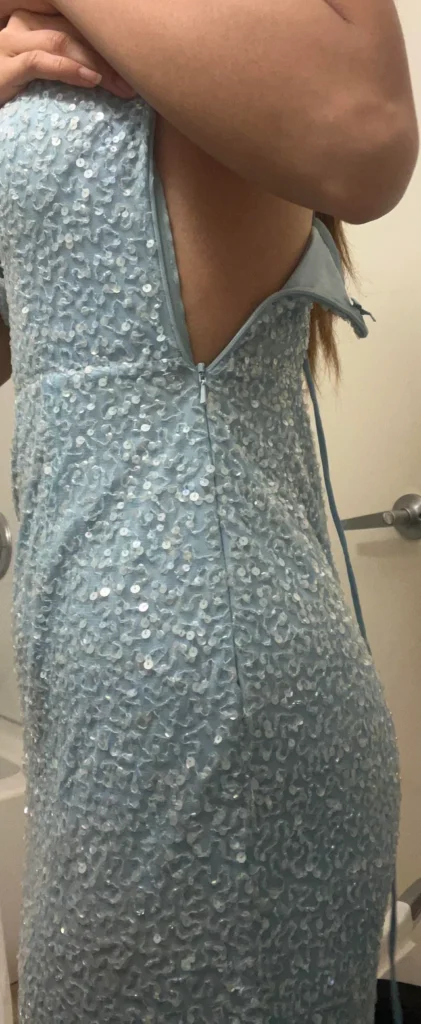
Few situations create faster prom panic than a zipper suddenly refusing to close. Many shoppers immediately assume the dress is ruined entirely, but several types of prom dress zipper repair are possible depending on the specific damage involved.
The first step is identifying exactly what kind of zipper issue has occurred. Different problems require different solutions, and rushing into repairs without understanding the cause may create worse damage.
Determine Whether the Zipper Is Stuck, Split, or Completely Broken
Not all zipper problems are equally serious. Some issues are surprisingly minor, while others require professional emergency tailoring immediately.
Common zipper problems include:
Stuck Zipper
The slider stops moving because fabric becomes trapped or tension increases too much.
Splitting Zipper
The zipper closes initially but separates again below the slider.
Broken Pull
The zipper track still functions, but the pull tab breaks off.
Completely Broken Teeth
The zipper structure itself becomes damaged or detached.
Understanding which issue you are facing helps determine whether temporary fixes are realistic.
Quick Temporary Fixes for Minor Zipper Problems
Certain zipper issues can sometimes be improved temporarily without replacing the entire closure system.
Helpful emergency approaches may include:
- Gently realigning zipper teeth
- Relieving fabric tension slightly
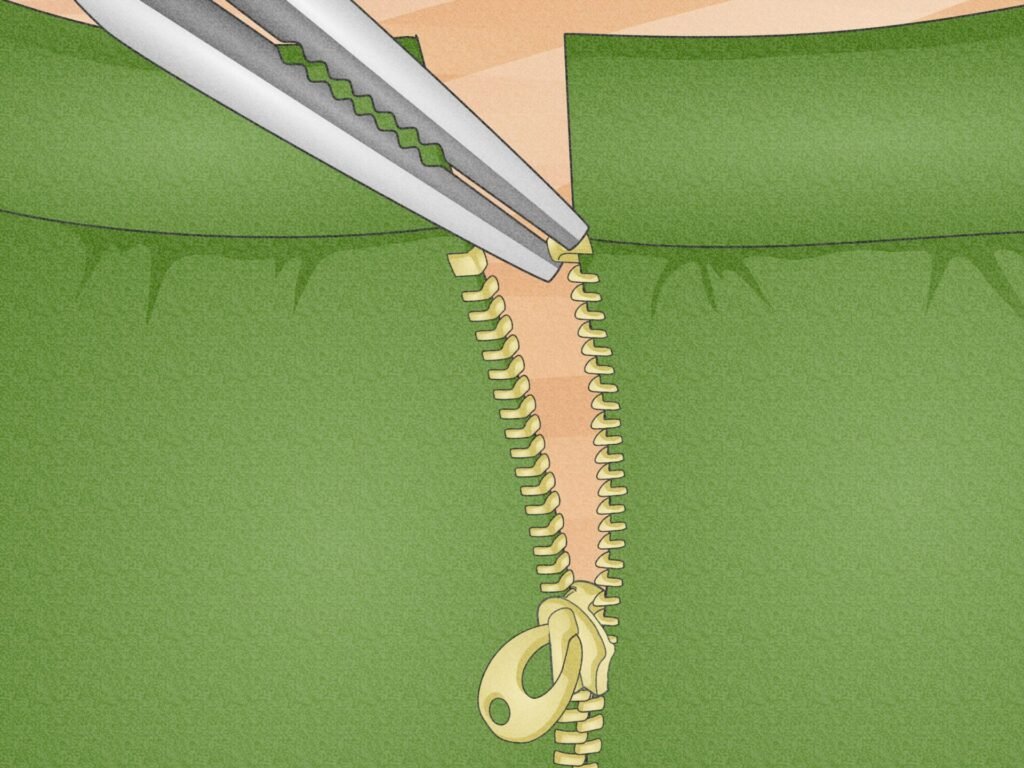
- Using pliers carefully on loose pulls
- Applying wax lightly to stuck tracks
- Smoothing trapped lining fabric
However, patience matters enormously. Pulling harder rarely fixes zipper problems safely.
If the zipper feels stuck:
- Stop immediately
- Check for trapped fabric
- Reduce tension on the dress
- Hold the fabric flat
- Move the zipper slowly
Forcing the zipper upward aggressively may permanently damage both the track and surrounding seams.
How to Realign a Splitting Zipper
A splitting zipper is one of the most common issues in fitted strapless gowns. This usually happens when the slider no longer presses the zipper teeth together properly.
Minor splitting may sometimes improve temporarily by:
- Fully unzipping the dress
- Flattening the zipper carefully
- Reclosing the zipper slowly
- Maintaining even tension throughout closure
Sometimes slight pressure adjustments help the zipper reconnect correctly.
If the dress feels extremely tight during closure, stop immediately. Excessive tension usually means the zipper is under structural strain rather than simply malfunctioning.
When to Use Safety Pins or Fashion Tape
Many emergency fashion kits include safety pins and fashion tape, both of which can help temporarily stabilize certain zipper problems.
Possible temporary uses include:
- Reinforcing small seam openings
- Stabilizing neckline gaps
- Holding fabric layers together
- Supporting loose zipper areas temporarily
However, safety pins should never replace actual structural support entirely in heavily fitted corset prom dresses.
Improper pin placement may:
- Tear delicate fabric
- Distort silhouette shape
- Create visible pulling
- Damage lining layers
The safest approach is subtle reinforcement rather than aggressive pinning.
Emergency Solutions if the Zipper Will Not Close
If the zipper refuses to close completely, emergency options may still exist depending on the dress design.
Possible temporary strategies include:
- Adding a decorative shawl
- Using temporary back fastening solutions
- Adjusting corset lacing if available
- Relieving tension through shapewear changes
- Seeking same day tailoring
Some shoppers panic and immediately attempt unsafe DIY reconstruction methods. This often causes permanent damage that professionals later cannot fully reverse.
When You Need a Professional Tailor Immediately
Certain zipper issues require expert repair as quickly as possible.
Professional help becomes necessary when:
- Teeth are missing
- The zipper detaches from seams
- The slider breaks completely
- Structural seams rip
- Boning shifts near the zipper
- Fabric tears around closure areas
Emergency tailors can often:
- Replace sliders
- Reinforce seams
- Add temporary closures
- Stabilize damaged structure
- Replace entire zippers if necessary
BareMuse always recommends prioritizing calm assessment before panic. Many zipper emergencies feel catastrophic initially but remain surprisingly manageable with proper handling.
How to Repair Loose Boning Quickly
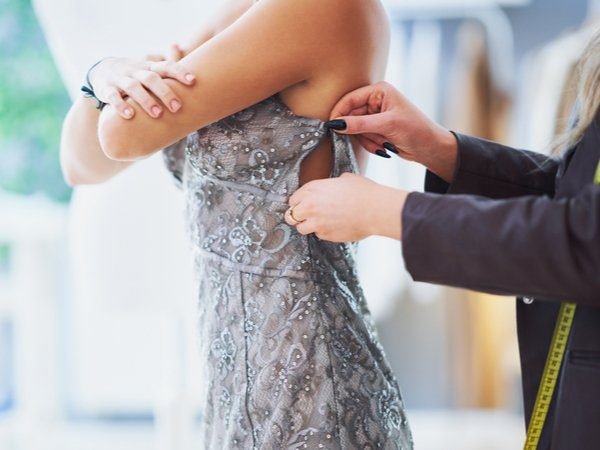
Loose boning is one of the most common yet misunderstood problems in strapless prom dresses and structured formalwear. Because boning is hidden inside the gown, many shoppers do not even realize there is an issue until the dress suddenly feels uncomfortable, twisted, uneven, or unstable. In more severe situations, the boning may begin poking through the fabric, creating pain and potentially damaging the gown permanently.
If you are searching for how to repair loose boning quickly, the most important thing to understand is that not all boning problems are equally serious. Some issues can be stabilized temporarily for prom night, while others require professional repair to avoid worsening the structural integrity of the dress.
Modern corset prom dresses use boning to maintain shape, support the bust, and distribute tension throughout the bodice. Once the boning shifts, bends incorrectly, or breaks, the silhouette may lose balance quickly.
Signs the Boning Has Shifted or Broken
Many shoppers initially confuse loose boning with general discomfort or poor fit. However, several warning signs specifically indicate structural problems inside the bodice.
Common signs include:
- Sharp pressure points
- Uneven bodice shape
- Twisting during movement
- A collapsing neckline
- Poking sensation under the fabric
- Wrinkling around structured seams
- Visible distortion in the corset area
- One side feeling less supportive than the other
In some cases, the boning may partially slide out of its casing, especially near seam edges or zipper areas.
This often happens because of:
- Excessive tension
- Improper storage
- Aggressive movement
- Poor quality construction
- Incorrect alterations
- Excessive pulling on tight gowns
Higher quality strapless gowns usually contain reinforced boning channels designed to reduce these problems significantly.
What to Do if Boning Starts Poking Out
A protruding boning piece can feel alarming, especially shortly before prom. However, immediate calm handling is extremely important because forcing the boning back aggressively may tear the fabric further.
If boning starts poking through:
- Stop wearing the dress temporarily
- Avoid bending the bodice forcefully
- Examine the fabric carefully
- Do not cut the exposed area immediately
- Prevent additional pressure on the seam
Small exposed sections may sometimes be stabilized temporarily by:
- Covering the area with soft fabric tape
- Reinforcing the seam gently
- Using temporary lining barriers
- Securing loose casing carefully
However, sharp exposed boning should never remain directly against the skin during wear.
Temporary Ways to Secure Loose Boning
Temporary stabilization methods can sometimes help preserve structure long enough for prom night, especially if professional repair access is limited.
Possible temporary fixes include:
- Reinforcing boning channels lightly
- Using fabric tape inside the lining
- Adding temporary stitching carefully
- Stabilizing distorted areas with support tape
- Reducing bodice tension slightly
The goal is minimizing movement rather than fully rebuilding the corset structure.
One important mistake people make is attempting to overcorrect the problem. Aggressive stitching or excessive reinforcement can distort the silhouette more visibly than the original issue itself.
Can You Remove Boning Yourself?
Many shoppers wonder whether removing damaged boning completely is the easiest solution. In reality, this depends heavily on the gown’s construction.
In some lightly structured dresses, removing one damaged bone may not dramatically affect support. However, in heavily structured corset prom dresses, removing boning can destabilize the entire bodice.
Removing boning improperly may:
- Collapse the neckline
- Distort the waist shape
- Create uneven tension
- Cause rolling or folding
- Reduce bust support
- Affect zipper stability
Without understanding garment engineering, DIY removal often creates larger problems than the original loose boning issue.
When Loose Boning Becomes Unsafe to Wear
Some structural damage should not be ignored, especially if the gown feels unstable or painful.
Professional help becomes necessary when:
- Boning repeatedly pokes outward
- Sharp edges contact the skin
- The bodice collapses visibly
- The dress twists dramatically
- Seams begin tearing
- The zipper area destabilizes
- The bust loses support entirely
BareMuse designs modern strapless formal dresses with reinforced structure because long event wear requires stability, flexibility, and durability simultaneously.
Emergency Repair Kits Every Prom Shopper Should Have
One of the smartest ways to reduce prom stress is preparing an emergency fashion kit before the event itself. Even high quality strapless dresses can experience minor issues during long nights involving movement, dancing, sitting, transportation, and photography.
Professional stylists, celebrities, and red carpet teams almost always carry emergency repair tools because quick fixes often prevent small problems from becoming major wardrobe disasters.
A strong emergency dress repair kit does not need to be complicated. Instead, it should focus on versatile items that solve multiple common issues efficiently.
Fashion Tape
Fashion tape remains one of the most useful tools for strapless prom dresses because it can stabilize:
- Loose necklines
- Small gaps
- Minor slipping
- Temporary seam separation
- Bust positioning
Proper application matters significantly. The tape should support the fabric naturally without pulling aggressively against delicate materials.
Many stylists also use fashion tape preventively before issues occur.
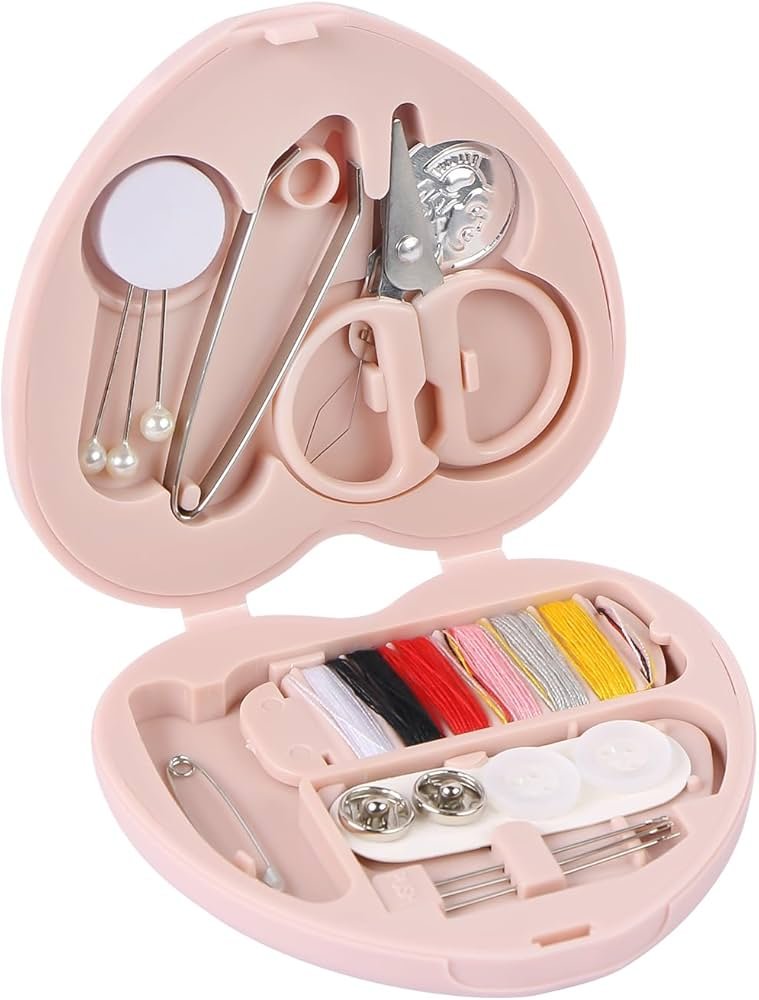
Mini Sewing Kit
A compact sewing kit can solve surprisingly many formalwear emergencies quickly.
Helpful sewing kit items include:
- Neutral thread colors
- Small scissors
- Hand sewing needles
- Extra hooks
- Tiny safety pins
Even basic stitching knowledge can temporarily stabilize:
- Loose lining
- Minor seam openings
- Detached straps
- Fabric separation
Safety Pins
Safety pins are useful, but they should be treated carefully in delicate strapless gowns.
Best uses include:
- Hidden lining support
- Temporary emergency closures
- Reinforcing internal layers
- Stabilizing accessories
Avoid placing pins directly in highly visible satin or embellished fabric whenever possible.
Double Sided Tape
Double sided tape differs slightly from standard fashion tape and can help secure:
- Folded fabric
- Neckline shaping
- Temporary hems
- Interior structure placement
This becomes especially useful in dresses with layered construction.
Portable Steamer
Wrinkled fabric can make otherwise beautiful gowns appear damaged or poorly fitted. A portable steamer helps restore:
- Satin smoothness
- Tulle volume
- Velvet appearance
- Structured draping
However, overheating certain structured fabrics may weaken internal adhesives or lining materials, so caution remains important.
Extra Bra Cups or Padding
Removable padding helps solve:
- Minor looseness
- Bust imbalance
- Fit inconsistencies
- Structural gaps
Many stylists keep multiple cup sizes available during formal fittings for quick silhouette adjustments.
BareMuse encourages shoppers to prepare for prom proactively because confidence often comes from knowing small emergencies can be managed calmly.
Common Mistakes People Make During Emergency Dress Repairs
During fashion emergencies, panic often leads to impulsive decisions that create bigger problems than the original issue. Many viral “quick fixes” online may appear effective briefly but actually damage gowns permanently.
Understanding what not to do is just as important as learning proper quick prom dress repair strategies.
Pulling a Stuck Zipper Too Hard
This is one of the most common mistakes in prom dress zipper repair situations.
Aggressive pulling often causes:
- Broken teeth
- Detached sliders
- Torn seams
- Fabric ripping
- Structural distortion
A stuck zipper should always be approached gradually and carefully.
Using Glue Incorrectly
Some shoppers attempt emergency repairs using household glue products. Unfortunately, many adhesives stain formal fabrics permanently or harden delicate materials unnaturally.
Glue misuse may:
- Damage satin
- Leave visible marks
- Stiffen soft fabrics
- Distort draping
- Create discoloration
Professional fabric adhesives differ significantly from household glue products.
Cutting Internal Structure Without Understanding Construction
People sometimes cut:
- Boning channels
- Lining layers
- Corset structure
- Support panels
without realizing how important these components are for the gown’s balance.
Modern corset prom dresses rely heavily on internal engineering. Random cutting can completely destabilize the silhouette.
Ignoring Fabric Type
Different fabrics react differently to:
- Heat
- Tape
- Pressure
- Stretching
- Stitching
For example:
- Satin snags easily
- Velvet crushes under pressure
- Sequins complicate sewing
- Mikado resists stretching
- Tulle tears more easily
This is why professional alterations require fabric specific knowledge.
Trying Viral Hacks That Damage the Dress
Social media often promotes unrealistic “instant fixes” that prioritize speed over garment safety.
Risky viral hacks may include:
- Overheating fabric
- Aggressive stretching
- Unsafe taping methods
- Excessive pinning
- Improper corset tightening
While some online tricks appear dramatic on camera, they often damage the gown after short wear periods.
BareMuse emphasizes careful problem solving because preserving dress structure matters more than attempting risky shortcuts.
How BareMuse Designs Strapless Dresses for Better Durability
BareMuse understands that shoppers investing in strapless prom dresses want more than visual beauty alone. They also want security, durability, structure, and reliability throughout one of the most important nights of their lives.
This is why modern construction quality matters enormously.
Reinforced Zipper Construction
BareMuse prioritizes stronger zipper engineering through:
- Reinforced seam placement
- Structured zipper panels
- Balanced tension distribution
- High quality closures
- Stabilized lining support
These details reduce stress on closure areas during movement and wear.
Modern Corsetry and Secure Boning
Today’s corset prom dresses should feel supportive rather than restrictive.
BareMuse focuses on:
- Flexible boning systems
- Comfortable structure
- Reinforced boning channels
- Balanced support engineering
- Contoured shaping
This helps prevent common issues like twisting, collapsing, or shifting during events.
Premium Fabrics That Handle Stress Better
Fabric quality directly affects durability.
BareMuse selects materials designed to balance:
- Elegance
- Flexibility
- Structural stability
- Movement comfort
- Long wear durability
Higher quality fabrics typically resist seam stress and distortion more effectively than lower grade alternatives.
Why Proper Sizing Prevents Most Dress Emergencies
Many emergency prom dress fixes begin with preventable sizing problems. Dresses placed under excessive tension naturally experience more stress around:
- Zippers
- Boning
- Waist seams
- Bust structure
Proper sizing dramatically reduces this risk.
BareMuse encourages:
- Accurate measurements
- Realistic fit expectations
- Tailoring preparation
- Early fitting appointments
Choosing High Quality Strapless Prom Dresses
Not all gowns are constructed equally. Higher quality strapless formal dresses typically include:
- Better internal structure
- Stronger stitching
- Reinforced support systems
- Improved fabric quality
- More durable closures
These construction details often determine whether a dress survives hours of movement comfortably.
Conclusion
If you are searching for how to repair a broken zipper or loose boning quickly, the most important thing to remember is that many formalwear emergencies are manageable with calm decision making and the right repair strategy. While broken zippers and damaged boning can feel catastrophic before prom, most situations improve significantly through temporary stabilization, careful handling, or professional tailoring support.
BareMuse designs modern corset prom dresses and strapless gowns with durability, structure, and comfort in mind because confidence comes not only from appearance, but also from knowing your dress can support real movement, real wear, and unforgettable moments. Whether you prefer timeless satin silhouettes, sculpted corset gowns, or minimalist formalwear, BareMuse focuses on creating dresses that combine elegance with dependable construction for prom nights that should feel exciting rather than stressful.