At BareMuse, we believe a strapless dress is one of fashion’s most revealing tests of craftsmanship. With no straps to rely on, every element—structure, fabric, internal support, and tailoring—must work in perfect harmony. When done right, a strapless dress feels effortless, secure, and empowering. When done wrong, it slips, gaps, folds, or constantly needs adjusting. That is why so many women ask the same question before committing to a strapless gown: What every strapless dress needs to fit perfectly?
The answer is never just “the right size.” A flawless strapless fit is built, not hoped for. It requires precision tailoring, intelligent construction, and a checklist of internal elements that most people never see—but always feel.
This comprehensive guide breaks down every structural, technical, and tailoring detail that determines whether a strapless dress truly fits perfectly. Whether you are shopping off-the-rack, investing in a custom strapless gown, or preparing for professional alterations, this tailoring checklist will help you understand exactly what to look for—and what to demand.
The Foundation of a Perfect Fit: Internal Structure
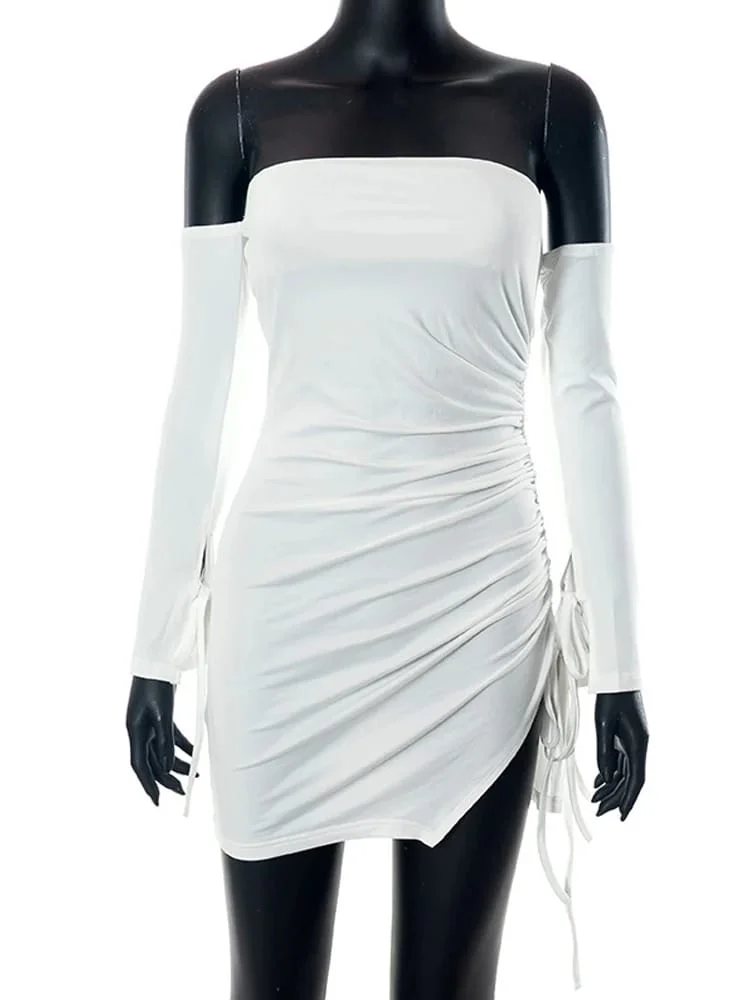
A perfectly fitting strapless dress is never the result of surface design alone. Long before fabric, color, or silhouette come into play, the internal structure determines whether the dress will perform as intended or fail under real wear conditions. Internal engineering is what separates a visually appealing strapless dress from one that feels secure, balanced, and reliable.
Why Structure Matters More Than Size?
Unlike dresses with straps or sleeves, a strapless dress must rely entirely on the torso for support. There is no external anchor to counteract gravity, which means the dress must generate its own resistance through internal construction. Fabric on its own—no matter how high the quality—cannot hold weight or maintain position without reinforcement.
A well-fitting strapless dress depends on three structural principles:
- Internal structure that provides vertical and horizontal stability
- Strategic tension that distributes pressure evenly across the bodice
- Balanced weight distribution that transfers load away from the neckline
This explains why two strapless dresses labeled the same size can feel dramatically different when worn. Sizing determines measurements, but structure determines performance. One dress may feel secure and effortless, while another of the same size may slip, fold, or require constant adjustment.
Structured Bodice Construction
The bodice is the functional core of any strapless dress. If the bodice lacks structure, no amount of tailoring elsewhere can compensate for that weakness. A strapless gown rises or fails based on how the bodice is built beneath the surface.
A properly structured bodice typically includes:
- Multiple fabric layers, combining outer fabric, lining, and interlining to create stability
- Reinforced vertical seams that maintain shape and resist downward pull
- Internal corsetry or a corset-style bodice, which provides controlled shaping and anchoring
- Managed compression around the torso to secure the dress without restricting movement
Among these, a corset-style bodice is particularly effective for strapless designs. By shaping the torso and distributing pressure across multiple structural points, it prevents the bodice from collapsing, folding, or sliding downward during wear. This construction also helps the dress maintain its silhouette throughout extended movement, sitting, or dancing.
A well-executed bodice should feel supportive and stable, yet never rigid or uncomfortable. Structure should be present, but invisible in wear.
Boning: The Invisible Architecture
Boning is the internal framework that allows a strapless dress to function as intended. While it remains hidden from view, its impact is immediately felt in how the dress holds shape, resists gravity, and maintains stability throughout wear. In well-constructed strapless gowns, boning does not merely add support—it defines the dress’s structural integrity.
The Role of Boning in Strapless Dresses
Boning is frequently underestimated, yet it provides one of the clearest answers to the question what makes a strapless dress stay up. Without boning, even a structured bodice will eventually collapse under the constant downward pull of gravity. Proper boning serves several critical functions:
- Maintains vertical structure, preventing the bodice from folding or slouching
- Prevents bodice rolling, especially at the waist and neckline
- Distributes weight evenly across the torso rather than concentrating pressure at the top edge
- Keeps the neckline upright, preserving the intended shape and fit
When boning is absent or poorly executed, the bodice begins to buckle under stress. This often results in slipping, distortion, or a constant need for adjustment—clear signs of structural failure rather than sizing issues. Boning should support the body’s natural lines while reinforcing the dress’s internal architecture, allowing the garment to remain stable without feeling rigid.
Types of Boning Used in Strapless Dresses
Not all boning performs the same, and selecting the correct type plays a significant role in both comfort and durability.
Spiral steel boning
- Offers flexibility while maintaining strong vertical support
- Moves naturally with the body’s curves and motion
- Resists warping over time
- Commonly used in high-end, bridal, and couture tailoring
Plastic boning
- Lightweight and cost-effective
- Provides basic structure with limited longevity
- More prone to bending under pressure
- Best suited for lightweight strapless dresses when paired with additional internal support
The choice of boning should always align with the weight of the fabric, the level of structure required, and the intended wear duration of the dress. Stronger fabrics and fuller silhouettes typically demand more durable boning solutions.
Boning Placement and Structural Balance
Even the highest-quality boning will fail if placed incorrectly. Proper boning placement ensures balanced tension and prevents localized stress points that lead to discomfort or distortion. Effective boning placement typically includes:
- Along vertical seams, to reinforce natural panel lines
- At the center front, to stabilize the neckline and bust area
- At the side seams, where downward pressure often concentrates
- Along the back closure, supporting zippers or lace-up backs
Incorrect placement can cause uneven pull, visible ridging, or poking, especially during sitting or movement. Well-distributed boning works quietly in the background, maintaining structure without drawing attention to itself.
Checklist
- Boning extends smoothly from bust to waist
- No bending, poking, or pressure points
- Even spacing across the entire bodice
When boning is correctly selected and precisely placed, the bodice remains stable, balanced, and comfortable throughout wear.
Bust Support: Built-In, Not Optional
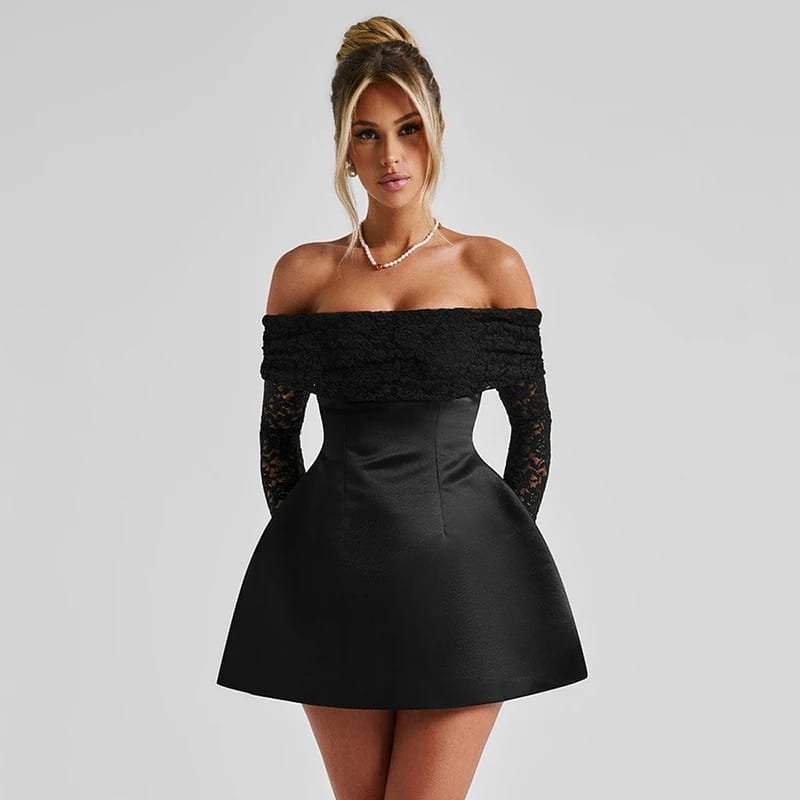
Bust support is one of the most decisive factors in whether a strapless dress fits perfectly or fails in real wear. Without external straps to share the load, all bust weight must be managed internally. When this support is inadequate or incorrectly designed, even a well-sized dress will feel unstable, uncomfortable, and visually unbalanced.
Built-In Bra vs Sew-In Cups
A strapless dress without proper bust support will never achieve a truly secure or flattering fit. Internal support is not an enhancement—it is a structural requirement. Common bust support solutions include:
- Built-in bra structures, integrated directly into the bodice
- Sew-in molded cups, designed to shape and smooth the bust area
- Underwire support, typically necessary for medium to larger busts
A built-in bra functions as the primary support system. It provides lift, separation, and containment, helping the bodice manage vertical weight without relying on excessive compression at the neckline. This is especially important for preventing downward drag and maintaining long-term stability.
Sew-in cups, by contrast, are shape refiners rather than load-bearing elements. They help eliminate gaping, improve symmetry, and enhance the natural bust line, but they cannot replace structural support on their own.
In high-quality strapless dresses, these elements work together: the built-in bra carries weight, while the cups perfect the silhouette.
Matching Bust Support to Bust Size
Effective support must always correspond to bust size and weight. A one-size-fits-all approach leads to imbalance, discomfort, and poor wear performance.
- Small bust: Light molded cups with minimal compression help maintain shape without unnecessary rigidity
- Medium bust: Structured cups combined with moderate boning provide lift while controlling movement
- Large bust: Underwire support, reinforced cups, and stronger waist anchoring are essential to manage weight effectively
The objective is not to force the bust upward, but to transfer its weight downward into the bodice and waist structure. When support is correctly distributed, the dress feels secure without pressing into the skin or restricting breathing.
Proper bust support also protects the neckline from strain, preserving both comfort and visual balance.
Checklist
- Bust feels supported without pressure or strain
- No spillage, gaping, or flattening
- Cups align naturally with the bust position
When bust support is correctly matched to body structure, the entire strapless dress becomes more stable, comfortable, and wearable.
Waist Anchoring: The Hidden Secret
One of the most overlooked components in strapless dress construction is waist anchoring. While attention is often placed on bust support or neckline grip, true stability frequently comes from a point lower on the body. When properly engineered, waist anchoring transforms a strapless dress from something that must be “held up” into something that is naturally secured.
What Is a Waist Stay?
A waist stay is an internal support band, typically made from elastic or grosgrain ribbon, that fastens firmly around the natural waist inside the dress. Unlike visible shaping elements, it remains completely hidden while performing one of the most critical structural roles. The function of a waist stay is simple but powerful:
- It anchors the dress at the waist, the most stable point of the torso
- It prevents downward movement caused by gravity
- It allows the bodice to rest securely without excessive compression at the top edge
By fastening independently from the outer fabric, the waist stay supports the internal structure rather than pulling against the neckline or bust.
Why Waist Support Prevents Slipping?
Many strapless dresses fail because they rely too heavily on friction at the bust line. This approach increases pressure at the neckline, often leading to discomfort, gaping, or visible strain. Waist anchoring solves this problem by redirecting force to a stronger, more stable area of the body. A properly positioned waist stay:
- Redirects downward force from the bust to the waist
- Stabilizes the entire bodice, reducing movement during walking or dancing
- Improves comfort and confidence by eliminating the need for constant adjustment
This is why many couture strapless gowns rely more on waist stays than on silicone grip or elastic at the neckline. When the waist does the work, the upper portion of the dress can remain smooth, balanced, and relaxed.
Grip & Anti-Slip Features
Grip and anti-slip elements are often viewed as the primary solution for keeping a strapless dress in place. In reality, they function best as supportive details rather than structural foundations. When integrated correctly, these features enhance stability and confidence; when overused, they create discomfort and mask deeper construction issues.
Silicone Grip and Elastic Bands
Many modern strapless dresses incorporate grip technology as part of their internal design. The most common applications include:
- Silicone grip lining along the neckline, designed to increase friction against the skin
- Hidden elastic grip bands inside the bodice, which add gentle resistance without visible bulk
These elements help reduce minor movement, particularly at the top edge of the dress. However, they are not intended to carry weight or replace proper bodice structure, boning, or waist anchoring. When grip is used as a primary support mechanism, it often leads to excessive pressure at the neckline and inconsistent fit. Effective grip should assist the dress—not force it to stay in place.
Proper Use of Grip Technology
Grip technology performs best when applied with restraint and precision. Its role is to fine-tune fit rather than correct fundamental construction flaws.
Grip works most effectively when it is:
- Used as a supplement, supporting existing structure rather than compensating for its absence
- Placed strategically, typically along the top edge or integrated near the waistline
- Combined with proper tailoring, including boning, built-in support, and waist anchoring
Over-reliance on grip can lead to skin irritation, rolling at the neckline, or visible distortion as the fabric struggles against constant friction. These issues often signal that the internal structure needs adjustment rather than additional grip
Neckline Engineering
The neckline is the most visible and most vulnerable area of a strapless dress. Because it sits at the top edge of the garment, even minor structural weaknesses become immediately noticeable. Proper neckline engineering ensures that the dress maintains its intended shape while remaining stable, comfortable, and visually clean throughout wear.
Neckline Shapes and Stability
Different neckline shapes respond differently to gravity, movement, and body structure. Understanding these behaviors is essential when evaluating strapless dress construction.
- Straight neckline: Creates a clean, modern line but demands stronger internal structure. Without sufficient reinforcement, it is more prone to gaping and rolling, particularly at the center front.
- Sweetheart neckline: Offers greater natural stability due to its curved edges, which help distribute tension more evenly across the bust and reduce upward strain.
Regardless of shape, a reinforced neckline edge is critical. Reinforcement helps the top edge resist distortion, preventing the fabric from curling outward or collapsing under pressure. This is especially important during movement, where the neckline experiences constant micro-shifts.
Preventing Common Neckline Issues
Neckline problems are among the most common fit complaints in strapless dresses, and they often signal imbalances in internal construction rather than sizing errors. Frequent issues include:
- Gaping at the center, caused by insufficient bust shaping or weak structure
- Curling outward, often the result of inadequate edge reinforcement
- Uneven tension, which can distort the neckline and compromise symmetry
Effective solutions focus on structural refinement rather than surface fixes:
- Top-edge reinforcement to strengthen the neckline’s resistance to stress
- Precise boning alignment to support the bust and maintain vertical balance
- Accurate bust shaping to ensure even tension across the bodice
When these elements work together, the neckline remains stable without requiring excessive tightness.
Fabric Choice & Behavior
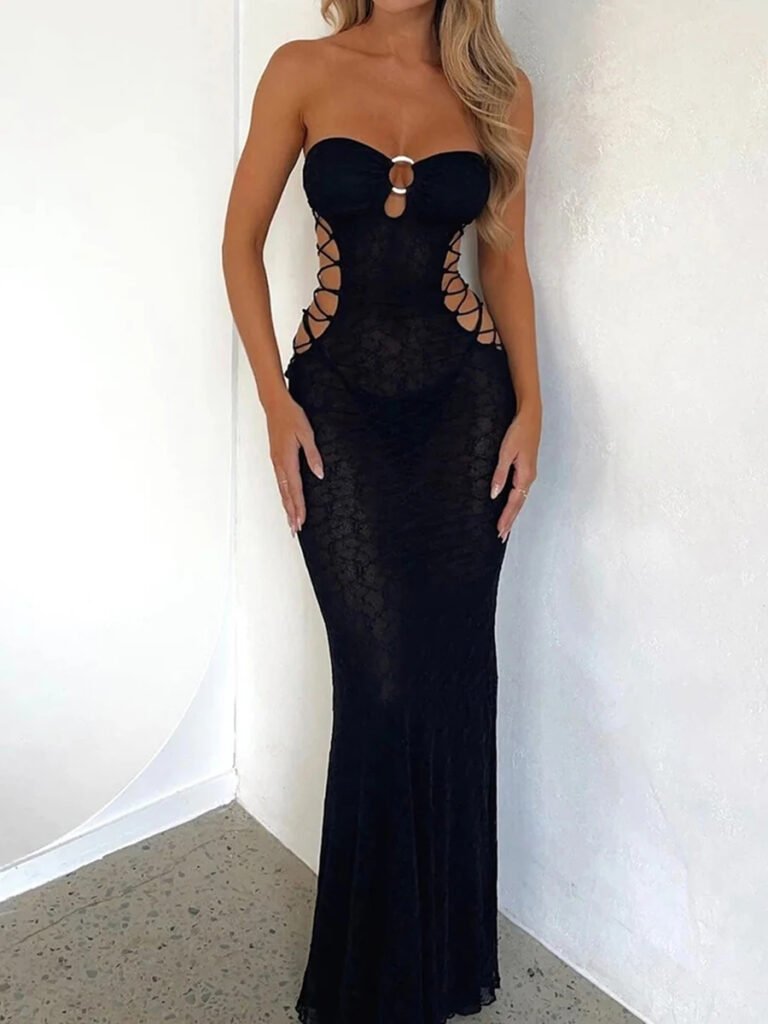
Fabric is not merely an aesthetic decision in a strapless dress—it is a structural variable. The way fabric behaves under tension, weight, and movement directly influences how well the bodice holds its shape over time. Understanding fabric behavior is essential to predicting fit performance, not just initial appearance.
Structured vs Soft Fabrics
Different fabrics respond very differently to gravity and pressure, especially in strapless constructions.
- Satin, mikado, and taffeta naturally provide structure. Their density and stiffness help the bodice maintain shape with less internal reinforcement. These fabrics resist collapsing and are well-suited for clean, architectural silhouettes.
- Chiffon, silk, and stretch fabrics offer softness and fluidity but lack inherent support. Without reinforcement, they are prone to wrinkling, sagging, and distortion under the weight of the bodice and bust.
Lightweight and soft fabrics therefore demand stronger internal support systems, including boning, interlining, and waist anchoring. When fabric choice and internal structure are mismatched, fit issues appear quickly—even if the dress looks flawless on the hanger.
Interfacing and Interlining
Interfacing and interlining are often invisible, yet they play a decisive role in stabilizing a strapless dress.
- Interfacing adds firmness to specific areas, such as the neckline or bodice panels, without increasing bulk
- Interlining supports overall shape and helps distribute weight evenly across the bodice
Used correctly, these layers allow the dress to maintain a smooth exterior while resisting stress at key points. Poorly chosen or omitted reinforcement often results in visible wrinkling, uneven tension, or fabric collapse during wear.
Back Construction & Closures
The back of a strapless dress plays a critical structural role that extends far beyond aesthetics. Because it absorbs a significant portion of tension and weight, back construction must be engineered with the same precision as the front bodice. Weak closures often undermine otherwise excellent tailoring.
Zipper Reinforcement
Zippers in strapless dresses endure constant stress. Without reinforcement, they are prone to:
- Pulling, which distorts the bodice
- Buckling, especially at the waist
- Gaping, which compromises fit and symmetry
Invisible zippers, while visually clean, often require internal support stitching or reinforced seam allowances to withstand tension. Proper zipper reinforcement ensures that the back remains flat and stable, even during extended wear or movement.
Lace-Up and Corset Backs
Lace-up and corset-style backs provide a more adjustable alternative to fixed closures. Their advantages include:
- Fine-tuning of fit, especially for fluctuating body measurements
- Improved weight distribution across the back panels
- Enhanced stability during long wear
Because tension is spread across multiple points rather than a single closure, corset backs often feel more forgiving while maintaining strong support. This makes them particularly effective for strapless gowns intended for extended events.
Comfort & Movement Testing
A strapless dress may appear flawless when standing still, but true fit quality is revealed through movement. Comfort and stability must be evaluated under real-life conditions, not just in front of a mirror. Wear testing exposes structural weaknesses that static fittings often overlook.
Why Wear Testing Matters?
A properly tailored strapless dress must maintain its fit across a full range of motion. Many common fit problems—such as slipping, pressure points, or neckline distortion—only become apparent once the body begins to move. Essential wear tests include:
- Sitting test, to check for bodice collapse or digging at the waist
- Walking test, to observe stability and balance
- Dancing test, to evaluate resistance to repeated motion
- Arm movement test, to assess neckline and bust security
Failure during any of these tests indicates structural imbalance rather than a minor sizing issue. A dress that cannot maintain its position in motion will require constant adjustment during wear, regardless of how well it fits initially.
All-Day Wearability
Beyond stability, a strapless dress must remain comfortable over extended periods. Long wear amplifies small construction flaws that might seem insignificant during a brief fitting. Key comfort factors include:
- Breathable lining, which reduces heat buildup and irritation
- Even pressure distribution, preventing localized strain at the neckline or waist
- Absence of sharp edges, poorly finished seams, or digging boning
A well-constructed strapless dress should feel supportive without creating fatigue or discomfort over time.
Final Tailoring Checklist
The difference between professional tailoring and basic alterations lies in completeness. A strapless dress should not be considered finished until every structural element has been evaluated as part of a cohesive system.
Before declaring a strapless dress “perfect,” confirm the following:
- Structured bodice reinforced with correctly placed boning
- Built-in bust support appropriate for bust size and weight
- Waist stay anchoring to prevent downward movement
- Reinforced neckline that resists gaping and rolling
- Fabric support layers matched to fabric behavior
- Secure back closure, reinforced for tension
- Successful movement testing across all wear scenarios
This checklist defines the standard of professional tailoring. Each component contributes to stability, comfort, and longevity, ensuring the dress performs as intended beyond the fitting room.
Common Strapless Dress Fit Problems & Professional Fixes
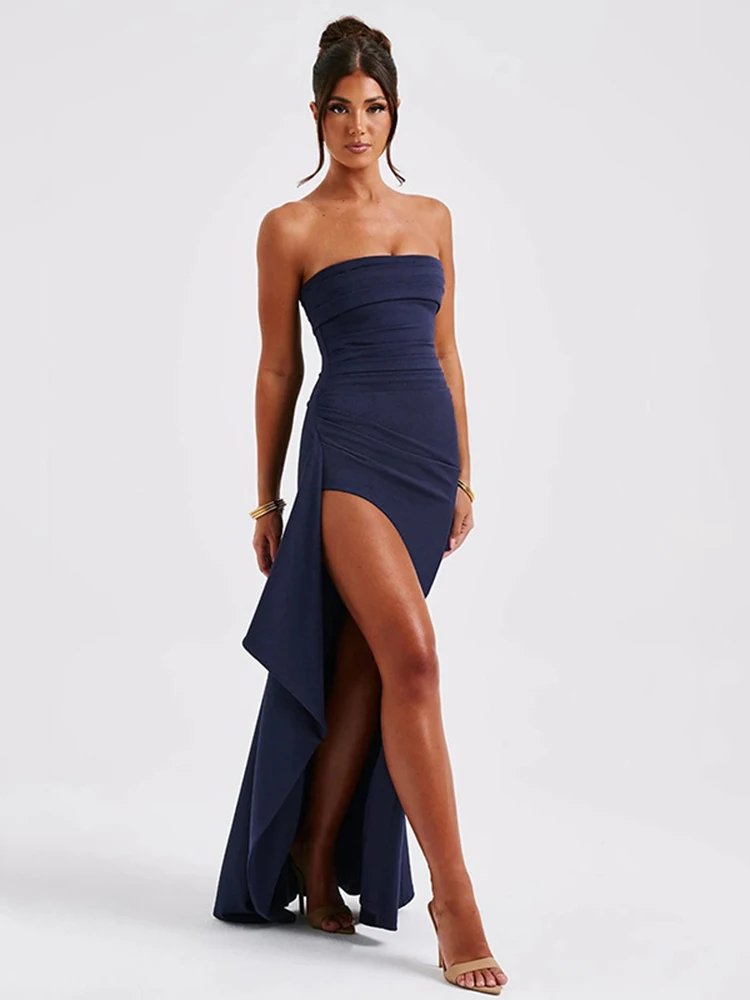
Even with careful tailoring, strapless dresses tend to reveal fit issues faster than other silhouettes. These problems often stem from internal structure rather than visible design flaws. Identifying the root cause is key to applying the correct, long-term solution instead of temporary fixes.
Dress Slipping Down
One of the most frequent strapless dress complaints is gradual downward movement during wear. This usually indicates that the bodice is relying on friction instead of structural anchoring.
- Install a waist stay to transfer weight from the bust to the natural waist
- Reinforce vertical boning to improve grip and shape retention
- Strengthen the inner bodice foundation to stabilize the torso
These adjustments create a secure anchor point that keeps the dress in position throughout extended wear.
Neckline Gaping
A gaping neckline often appears when the top edge lacks tension or when bust volume is unevenly supported. This issue becomes more noticeable during movement or when leaning forward.
- Refine cup shaping to match natural bust contours
- Reinforce the neckline edge with hidden stay tape or interfacing
- Adjust top-edge tension to maintain a clean, flush fit
Proper neckline control enhances both appearance and confidence, especially in motion.
Bust Spillage
Bust overflow signals insufficient internal support rather than a sizing issue alone. Without adequate structure, the bodice cannot contain or distribute bust weight correctly.
- Upgrade to a stronger built-in bra or corsetry base
- Reshape cups to improve lift and containment
- Rebalance internal support elements to reduce upward pressure
Effective bust support restores proportion and prevents constant readjustment.
Uneven Support
Asymmetrical support can cause twisting, pulling, or visible distortion across the bodice. This problem is typically rooted in incorrect boning placement or uneven internal tension.
- Realign boning channels for consistent vertical support
- Equalize internal tension across both sides of the bodice
- Reinforce weak structural points to restore balance
Balanced internal construction ensures stability and visual symmetry
Most strapless dress fit issues originate beneath the surface. Professional tailoring focuses on internal architecture, not surface-level corrections. When structure, support, and balance work together, a strapless dress delivers both security and refined comfort.
FAQs: What Every Strapless Dress Needs to Fit Perfectly?
Strapless dresses demand a higher level of construction precision than most silhouettes. The following questions address the core fit concerns that determine whether a strapless design feels secure, flattering, and wearable for hours.
What makes a strapless dress stay up?
A strapless dress stays in place through internal engineering rather than tightness. Key elements include a structured bodice, properly positioned boning, a reinforced neckline, and a waist stay that anchors the dress at the narrowest part of the torso. When these components work together, weight is distributed downward and inward, preventing slippage without discomfort.
Does every strapless dress need boning?
Yes. Boning provides vertical stability and prevents the bodice from collapsing or folding under body movement. Without boning, even the most precise sizing will fail to maintain shape. Well-placed boning should support the torso evenly while remaining flexible enough for natural motion.
Is a built-in bra necessary?
In most cases, a built-in bra or corsetry base is essential, particularly for medium to fuller busts. Internal bust support lifts, separates, and contains the bust, reducing strain on the neckline and top edge. This structure improves both comfort and silhouette while eliminating the need for external undergarments.
How tight should a strapless dress fit?
A strapless dress should fit snugly but never rely on compression. The bodice must feel secure against the body without restricting breathing, sitting, or movement. Proper fit comes from structure and balance, not excessive tightness.
Conclusion
At BareMuse, we see strapless dresses as wearable architecture. The most confident, comfortable strapless gowns are not the result of luck or sizing labels—they are the result of intention, tailoring, and invisible engineering. When you understand what every strapless dress needs to fit perfectly, you stop settling for constant adjustments and start demanding construction that works with your body. Boning, built-in support, waist anchoring, grip technology, and precision tailoring all come together to create a dress that stays exactly where it belongs. A perfect strapless fit isn’t magic. It’s craftsmanship—and now, you know how to recognize it.