Many people hear the word boning and immediately imagine something uncomfortable, stiff, or painfully restrictive. In reality, The Science of Boning: Why Good Internal Structure Changes Everything because high quality support systems are often the reason a formal dress feels secure, elegant, and surprisingly comfortable during long wear. Hidden structural engineering inside gowns affects everything from posture and silhouette balance to neckline stability and movement confidence. Whether someone is wearing a strapless prom dress, a sculpted evening gown, or an internally corseted silhouette, the difference between cheap construction and thoughtful support becomes obvious after only a few hours of wear.
This guide from BareMuse explores dress boning explained through a deeper look at internal structure in dresses, including how boning works, why support distribution matters, and how modern corset boning in formalwear has evolved far beyond old fashioned rigid corsets. This article also explains the relationship between structure and comfort, the differences between plastic and steel boning, and why strong supportive bodice engineering transforms the way formalwear fits the body. BareMuse combines fashion expertise with wearable design knowledge to help shoppers understand why hidden construction details often matter more than surface aesthetics alone.
What Boning Actually Does Inside a Dress
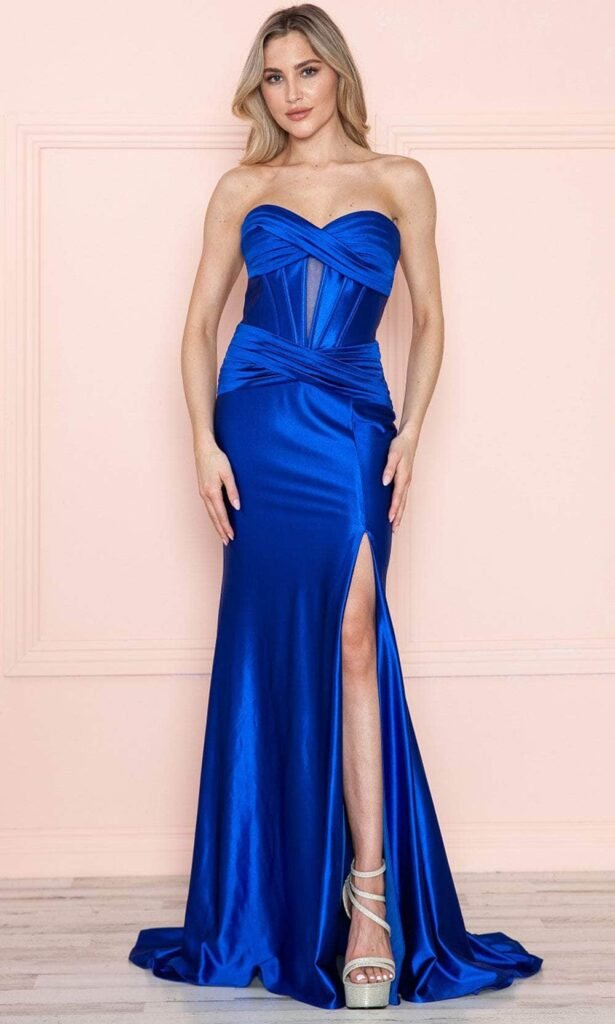
Boning exists to stabilize the garment structure rather than simply tighten the body. In modern formalwear, boning functions as an internal support system that helps the dress maintain shape, tension balance, and silhouette integrity during movement.
Without structural reinforcement, many strapless dresses would:
- Collapse downward
- Wrinkle heavily
- Shift during walking
- Lose neckline stability
- Feel uncomfortable after short wear
This is why boning in strapless dresses plays such a critical role in both visual appearance and physical comfort.
How Boning Supports Strapless Dresses
A strapless gown cannot rely on shoulder straps for support. Instead, the entire dress must anchor itself through:
- Waist tension
- Bodice shaping
- Internal support channels
- Balanced compression
Boning helps distribute the garment’s weight vertically throughout the bodice.
This prevents excessive pressure from concentrating only at the bust line.
Good strapless dress structure creates:
- Stable necklines
- Improved posture
- Better bust support
- Smoother contouring
- Reduced slipping
The best support systems feel balanced rather than painfully tight.
The Relationship Between Structure and Gravity
Gravity constantly pulls a strapless dress downward. Without internal reinforcement, fabric alone struggles to resist this force.
Boning acts as a structural framework that:
- Redirects tension
- Supports vertical shaping
- Stabilizes movement
- Reinforces fabric integrity
This explains why high quality formal dress construction feels dramatically different from poorly engineered gowns.
Well designed structure allows the dress to work with the body instead of fighting against it.
Why Tightness Alone Does Not Work
One major misconception about internal corsetry dresses is the idea that tighter always means more supportive.
In reality, excessive tightness often causes:
- Rib pain
- Bulging
- Restricted breathing
- Fabric distortion
- Unstable tension
Strong structure should come from engineered support systems rather than aggressive compression.
Luxury gowns frequently feel more comfortable because their support is distributed intelligently throughout the garment.
How Support Distribution Changes Comfort
The human body moves constantly during:
- Walking
- Sitting
- Dancing
- Breathing
- Turning
Good structured bodice support adapts to this movement while maintaining silhouette stability.
Poor construction often creates isolated pressure points because tension is not distributed evenly.
Balanced support systems improve:
- Long wear comfort
- Posture
- Movement ease
- Confidence
- Neckline security
BareMuse prioritizes internal engineering because invisible structure often determines whether a dress feels effortlessly elegant or physically exhausting after several hours.
The Different Types of Boning Used in Formalwear
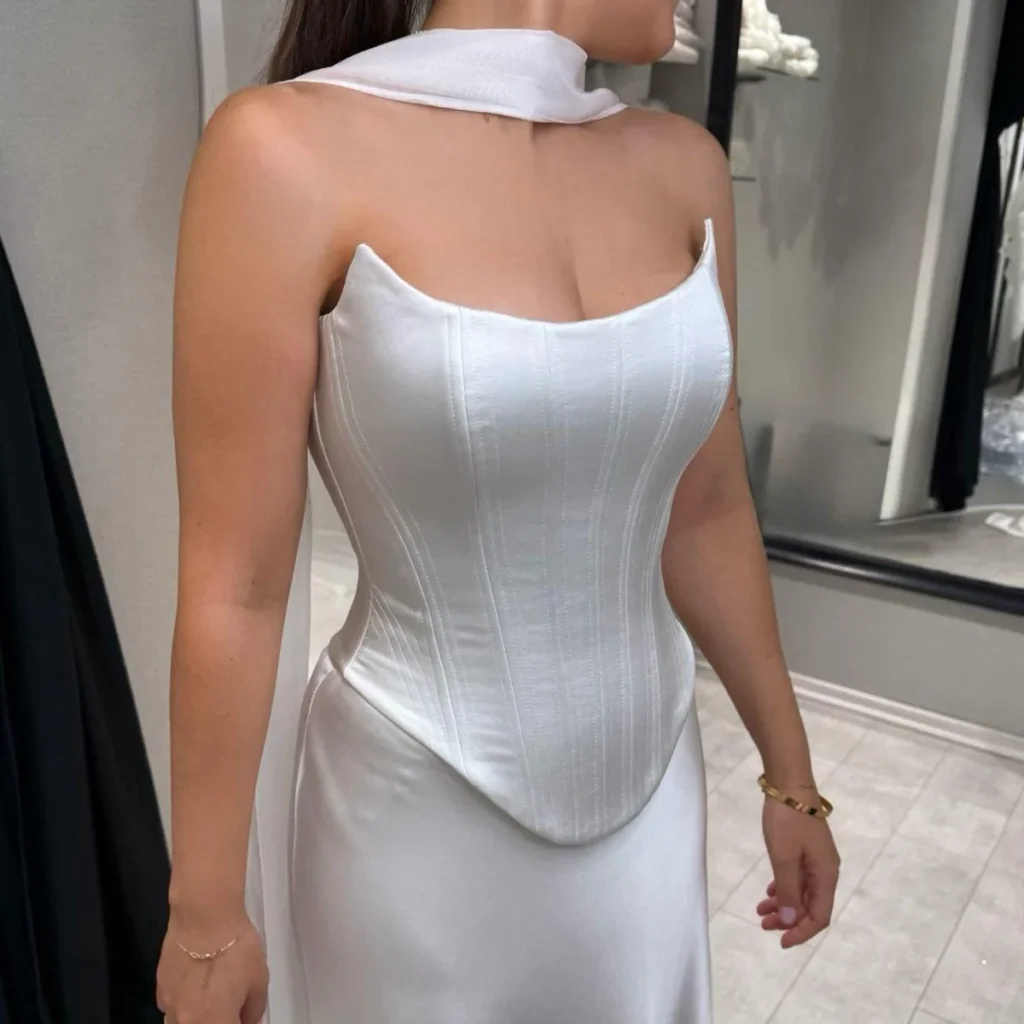
Not all boning materials perform the same way. Different gowns use different structural systems depending on:
- Silhouette
- Fabric type
- Support requirements
- Flexibility needs
- Budget level
Understanding these materials helps shoppers evaluate garment quality more accurately.
Plastic Boning
Plastic boning is one of the most common support materials in affordable formalwear.
Advantages include:
- Lightweight feel
- Flexibility
- Lower production cost
- Easy shaping
However lower quality plastic boning may:
- Warp with heat
- Bend permanently
- Collapse over time
- Provide inconsistent support
Thin plastic boning often struggles in heavily structured strapless gowns.
Steel Boning
Steel boning offers significantly stronger structural reinforcement.
Benefits include:
- Excellent stability
- Better posture support
- Improved waist shaping
- Stronger neckline control
- Long term durability
High quality corset boning in formalwear frequently uses steel because it maintains consistent structure during extended wear.
Steel boning often appears in:
- Couture gowns
- Luxury corsetry
- Structured bridalwear
- Architectural bodices
Spiral Steel Boning
Spiral steel differs from flat steel because it allows greater multidirectional flexibility.
This improves:
- Sitting comfort
- Movement ease
- Body contour adaptation
Spiral steel combines support with mobility, making it valuable in gowns requiring both flexibility and stability.
Synthetic Flexible Boning
Modern synthetic materials attempt to balance:
- Comfort
- Durability
- Flexibility
- Cost efficiency
Advanced synthetic boning systems can perform surprisingly well when paired with strong garment engineering.
The quality of implementation matters more than the material category alone.
Hybrid Support Systems
Many luxury gowns combine multiple structural technologies together, including:
- Boning
- Mesh compression
- Waist stays
- Power lining
- Built in corsetry
These hybrid systems improve:
- Movement balance
- Bust support
- Long wear comfort
- Silhouette refinement
A sophisticated support system rarely depends on one component alone.
Quick Comparison Checklist
| Boning Type | Flexibility | Support Strength | Common Usage |
|---|---|---|---|
| Plastic Boning | High | Moderate | Affordable formalwear |
| Flat Steel Boning | Low to Moderate | Strong | Corsets and couture gowns |
| Spiral Steel Boning | Moderate | Strong | Luxury flexible structure |
| Synthetic Flexible Boning | Moderate to High | Moderate | Modern comfort focused gowns |
BareMuse carefully studies how support materials interact with fabric and body movement because excellent structure depends on total engineering harmony rather than isolated components.
How Internal Structure Changes the Entire Silhouette

The visual impact of a gown depends heavily on what happens underneath the outer fabric. Many shoppers focus only on visible details such as embellishments, color, or neckline shape, but the hidden architecture inside the dress often determines whether the silhouette looks polished or unstable.
This is why The Science of Boning: Why Good Internal Structure Changes Everything extends far beyond simple support. Internal engineering changes how the body carries the garment, how fabric drapes, and how proportions appear visually during movement.
Posture Improvement
One of the most overlooked benefits of strong structured gown construction is posture support.
Well engineered boning helps:
- Stabilize the torso
- Encourage upright posture
- Reduce slouching
- Improve neckline presentation
- Support balanced movement
A properly supported bodice naturally encourages the wearer to stand taller because the dress distributes tension more evenly across the upper body.
Poorly structured gowns often cause:
- Shoulder tension
- Hunched posture
- Constant adjustment
- Physical fatigue
This is especially noticeable during long formal events where posture gradually affects comfort and confidence.
Bust Support and Lift
Good supportive bodice engineering creates lift through structural shaping rather than excessive compression.
High quality internal support systems help:
- Elevate the bust naturally
- Improve silhouette balance
- Reduce downward pulling
- Stabilize movement
This creates cleaner lines across:
- The neckline
- Side seams
- Waist area
Weak support systems often force the bust downward, creating:
- Wrinkling
- Neckline collapse
- Uneven tension
- Constant pulling upward
Waist Definition
Boning also helps define the waist visually by stabilizing vertical shaping throughout the bodice.
This creates:
- Smoother contouring
- More elegant proportions
- Enhanced silhouette structure
- Better fabric drape
Without structure, fabric may cling inconsistently or lose definition during movement.
The most elegant internal structure in dresses works subtly rather than aggressively, shaping the body without appearing rigid or overly restrictive.
Neckline Stability
Neckline stability is one of the clearest indicators of construction quality.
Strong support systems help the neckline remain:
- Smooth
- Symmetrical
- Stable
- Properly positioned
during:
- Walking
- Sitting
- Dancing
- Turning
A rolling or collapsing neckline often signals weak engineering underneath the fabric.
This is why luxury strapless gowns frequently look more polished in motion even when the visual design appears relatively minimal.
Movement Balance
The best formal dress construction allows movement while maintaining structural integrity.
Good support systems help the dress:
- Move naturally
- Recover shape quickly
- Avoid twisting
- Maintain tension balance
Movement balance is particularly important in:
- Mermaid gowns
- Strapless silhouettes
- Corset bodices
- Sculptural dresses
BareMuse carefully engineers movement adaptability because real elegance depends on how beautifully a gown performs during actual wear rather than static posing alone.
Why Good Internal Structure Feels More Comfortable
Many shoppers assume heavily structured gowns automatically feel uncomfortable. In reality, strong engineering often improves comfort dramatically because support becomes more evenly distributed throughout the garment.
Reducing Pressure Points
Poor construction usually creates isolated stress areas around:
- The ribs
- Bust line
- Side seams
- Waist
Good boning systems spread tension more evenly across the bodice.
This reduces:
- Digging
- Pinching
- Skin irritation
- Pressure concentration
Luxury gowns often feel surprisingly wearable because their structure works with body movement rather than resisting it aggressively.
Balanced Compression
Balanced compression differs significantly from excessive tightness.
Well designed structured bodice support should:
- Feel secure
- Allow breathing
- Maintain posture
- Support movement
without creating painful restriction.
Balanced support creates a smoother and more stable wearing experience during long events.
Breathing and Rib Comfort
One sign of poor construction is restricted breathing.
Weak support systems often rely on extreme tightness to prevent slipping, which creates:
- Rib discomfort
- Breathing restriction
- Fatigue
- Skin pressure
Better engineering reduces the need for over tightening because the dress remains supported structurally.
Preventing Constant Adjustment
A properly engineered strapless dress should not require endless pulling upward throughout the night.
Good how strapless dresses stay up principles include:
- Waist anchoring
- Stable boning
- Reinforced lining
- Balanced tension
- Proper neckline placement
Constant adjustment usually signals weak structural support rather than a personal body issue.
Long Wear Stability
Events often last several hours.
The difference between weak and strong internal structure becomes increasingly obvious over time because body heat, movement, and gravity continuously stress the garment.
High quality internal corsetry dresses maintain:
- Shape retention
- Support consistency
- Movement comfort
- Posture stability
throughout extended wear.
BareMuse believes comfort and elegance should work together because true luxury formalwear should feel wearable from beginning to end rather than visually impressive but physically exhausting.
The Difference Between Cheap and High Quality Bodice Engineering
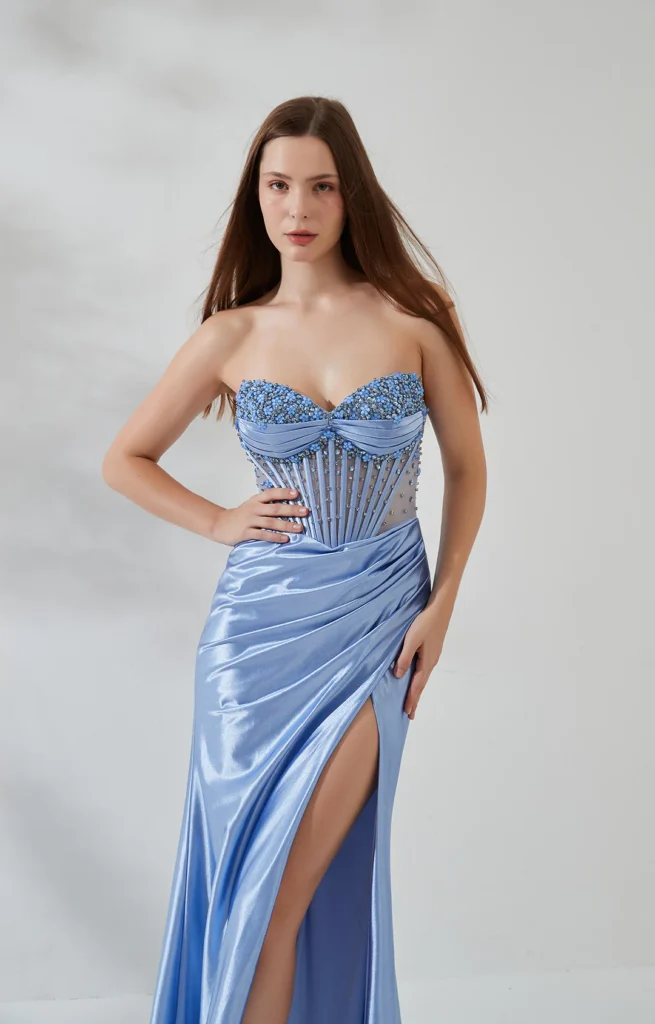
Two dresses may look nearly identical online yet feel completely different once worn. Much of this difference comes from hidden engineering quality.
Weak Boning Placement
Cheap construction often uses minimal boning positioned only for appearance rather than structural function.
Problems may include:
- Uneven support
- Neckline collapse
- Side seam folding
- Poor tension balance
Weak placement reduces the effectiveness of the entire support system.
Poor Fabric Reinforcement
Boning alone cannot stabilize a dress without strong surrounding reinforcement.
Weak reinforcement may cause:
- Wrinkling
- Distortion
- Stretching
- Fabric collapse
Better gowns combine boning with:
- Reinforced seams
- Supportive lining
- Waist stays
- Structured fabrics
Minimal Support Systems
Lower cost gowns sometimes imitate structure visually without including genuine support engineering.
Decorative corset seams do not necessarily mean real corsetry exists underneath.
Many inexpensive gowns rely primarily on:
- Tightness
- Thin lining
- Minimal boning
rather than true supportive bodice engineering.
Luxury Corsetry Techniques
Luxury construction frequently incorporates:
- Multi layer support systems
- Hidden waist anchoring
- Flexible reinforcement
- Precision seam shaping
- Movement tested engineering
These techniques improve:
- Comfort
- Posture
- Silhouette consistency
- Long wear stability
Why Designer Dresses Often Feel Better
Designer gowns often feel better because construction receives greater investment in:
- Pattern engineering
- Structural testing
- Fabric integration
- Internal support refinement
The result is usually:
- Better movement
- More balanced support
- Cleaner silhouette shaping
- Improved comfort
BareMuse studies high level structural design principles closely because exceptional gowns depend on hidden craftsmanship just as much as visible aesthetics.
Common Myths About Boning in Dresses
Many misconceptions surrounding boning come from outdated ideas about corsetry and formalwear structure.
“Boning Means Painful”
High quality boning should support rather than hurt.
Pain usually results from:
- Poor sizing
- Weak engineering
- Cheap materials
- Incorrect tension balance
Strong structure often improves comfort when designed correctly.
“Tighter Means More Support”
Excessive tightness often weakens wearability.
Good support depends on:
- Tension distribution
- Waist anchoring
- Structural balance
- Engineering precision
rather than aggressive compression alone.
“Only Corsets Use Boning”
Boning appears in many garments beyond traditional corsets, including:
- Strapless gowns
- Bridal dresses
- Eveningwear
- Sculptural fashion
- Formal tops
Modern dress boning explained principles extend across many categories of structured fashion.
“All Structured Dresses Feel Stiff”
Many modern support systems prioritize:
- Flexibility
- Movement
- Breathability
- Comfort
especially in luxury formalwear.
Strong structure does not automatically mean rigidity.
“Boning Is Only for Full Busts”
All body types benefit from structural balance.
Boning can improve:
- Neckline stability
- Silhouette shaping
- Posture
- Movement support
regardless of bust size.
BareMuse believes educating shoppers about garment engineering helps them make more confident fashion decisions and better understand the hidden craftsmanship behind elegant formalwear.
Why BareMuse Prioritizes Thoughtful Internal Structure
BareMuse designs formalwear with the belief that internal engineering shapes the entire wearing experience.
Designing for Comfort and Security
Every gown should feel:
- Stable
- Comfortable
- Wearable
- Secure
through real movement and long events.
Movement-Tested Construction
BareMuse evaluates gowns during:
- Walking
- Sitting
- Turning
- Dancing
to ensure structure remains balanced throughout movement.
Balancing Flexibility With Stability
Strong support should still allow:
- Natural breathing
- Comfortable posture
- Smooth mobility
- Flexible movement
This balance defines modern luxury construction.
Creating Elegant Strapless Support
BareMuse focuses heavily on:
- Neckline stability
- Waist anchoring
- Balanced compression
- Supportive lining systems
to create polished strapless silhouettes that remain comfortable throughout wear.
Engineering Dresses for Real Wear
True elegance depends on performance, not just appearance.
BareMuse combines thoughtful structured gown construction with wearable comfort to create dresses that feel refined, supportive, and confidently engineered for real events.
Conclusion
Understanding The Science of Boning: Why Good Internal Structure Changes Everything helps shoppers appreciate the hidden craftsmanship behind elegant formalwear. Strong internal engineering affects:
- Posture
- Support
- Movement
- Comfort
- Silhouette balance
- Long wear confidence
far more than many people initially realize.
Whether evaluating boning in strapless dresses, comparing internal corsetry dresses, or learning about supportive bodice engineering, it becomes clear that high quality structure transforms how a gown feels and performs throughout real wear.
The best formal dresses do not rely on extreme tightness or rigid restriction. Instead, they use thoughtful construction to create:
- Stable support
- Comfortable movement
- Elegant shaping
- Lasting wearability
BareMuse believes beautiful fashion begins beneath the surface. Through carefully engineered bodices, refined support systems, and movement focused design, BareMuse creates gowns that combine sophistication with wearable comfort, helping every strapless silhouette feel polished, secure, and timeless.