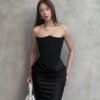
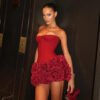
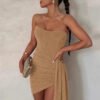
The growing popularity of Textured Strapless Dresses has completely transformed modern prom and evening fashion. While minimalist gowns continue dominating quiet luxury aesthetics, many fashion forward shoppers are now embracing dimensional details like ruched strapless dresses, pleated silhouettes, sculpted fabrics, and 3D floral dresses to create stronger visual impact and more personalized silhouettes. Texture changes how a gown moves, reflects light, frames the body, and shapes proportions. This is why two dresses with the exact same silhouette can look dramatically different depending on fabric structure and surface detailing. Modern formalwear designers increasingly use texture not only for decoration, but also for body contouring, proportion balancing, and visual storytelling.
This guide from BareMuse explores Textured Strapless Dresses through the lens of silhouette engineering, fashion psychology, body proportion styling, and couture inspired design techniques. This article covers pleated prom dresses, floral appliqué gowns, ruching placement, dimensional eveningwear, sculpted formal silhouettes, and how texture changes the way the body appears visually. BareMuse will also explain how different textures affect curves, waist definition, shoulder balance, and movement. Whether you prefer romantic floral textures, architectural pleats, dramatic ruching, or elegant dimensional fabrics, this guide will help you choose textured gowns that flatter your proportions while maintaining sophistication and modern elegance.
Why Texture Matters in Strapless Dress Design
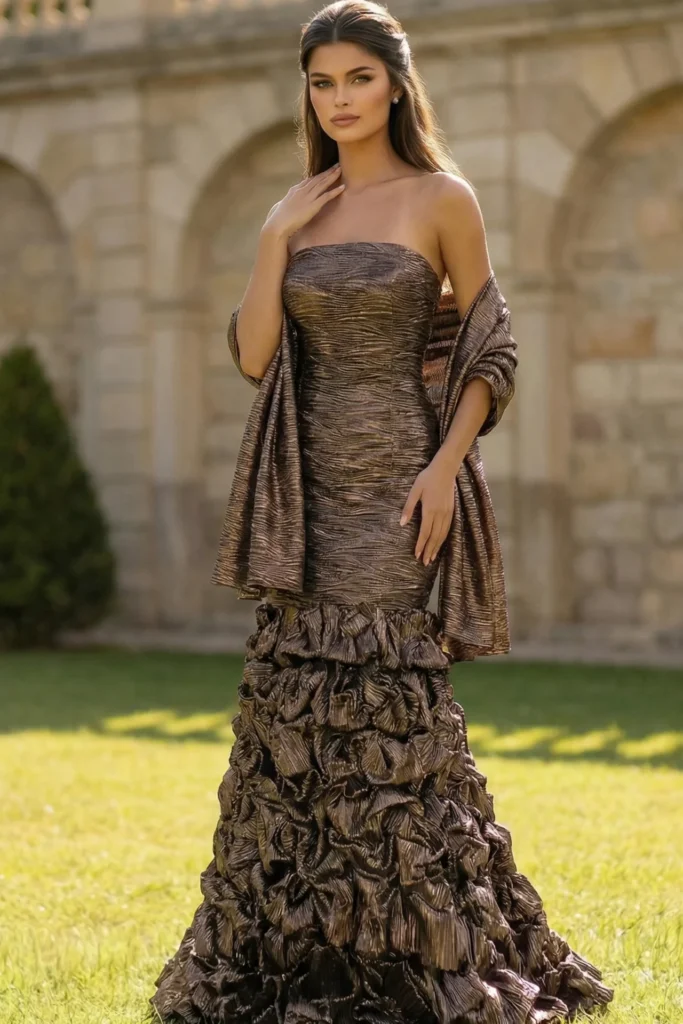
Texture is far more than decoration in formalwear. Within Textured Strapless Dresses, texture acts as a visual shaping tool that changes how the eye perceives:
- Curves
- Proportions
- Volume
- Movement
- Structure
- Body balance
Professional designers strategically place texture to create illusions that can:
- Slim the waist
- Add curves
- Elongate the body
- Soften structure
- Increase drama
- Balance proportions
This is why texture placement matters just as much as silhouette selection.
How Texture Changes Visual Proportions
Every texture interacts differently with light and movement.
For example:
- Vertical pleats elongate the body
- Diagonal ruching slims the waist
- Large florals add volume
- Heavy embellishment widens silhouettes
- Structured textures create stronger architecture
The eye naturally follows texture direction. Designers use this principle intentionally to influence how the body appears visually.
In textured evening gowns, strategic fabric placement often creates more flattering results than simply tightening the garment itself.
The Psychology of Dimensional Fashion
Texture creates emotional impact because dimensional fabrics feel:
- Luxurious
- Artistic
- Dynamic
- Couture inspired
- Visually engaging
Flat fabrics often communicate simplicity and elegance, while textured gowns create stronger visual personality.
This is one reason many shoppers are drawn toward:
- Sculpted ruching
- Layered florals
- Architectural pleats
- Embossed fabrics
- Mixed textures
within modern prom fashion.
Why Texture Creates More Visual Interest
Minimalist dresses rely heavily on:
- Tailoring
- Silhouette
- Fabric quality
Meanwhile, textured gowns immediately create:
- Depth
- Shadow
- Movement
- Light variation
- Dimensional contrast
This allows textured dresses to appear more dramatic even without:
- Excessive sparkle
- Heavy embellishment
- Bold colors
Professional stylists frequently use texture to create luxury visual effects without overwhelming the gown.
Texture vs Minimalism in Modern Prom Fashion
Modern prom trends increasingly balance:
- Quiet luxury minimalism
and - Couture inspired dimensional fashion
rather than choosing only one direction.
Some of the most fashionable gowns now combine:
- Clean silhouettes
with - Controlled texture placement
For example:
- Minimal satin gowns with soft ruching
- Structured dresses with subtle pleats
- Elegant silhouettes with delicate floral appliqué
This hybrid approach keeps textured formal dresses sophisticated rather than overly theatrical.
BareMuse uses texture strategically to enhance silhouette balance while preserving elegance, allowing dimensional details to feel intentional instead of excessive.
Ruched Strapless Dresses: Sculpting the Body Through Fabric
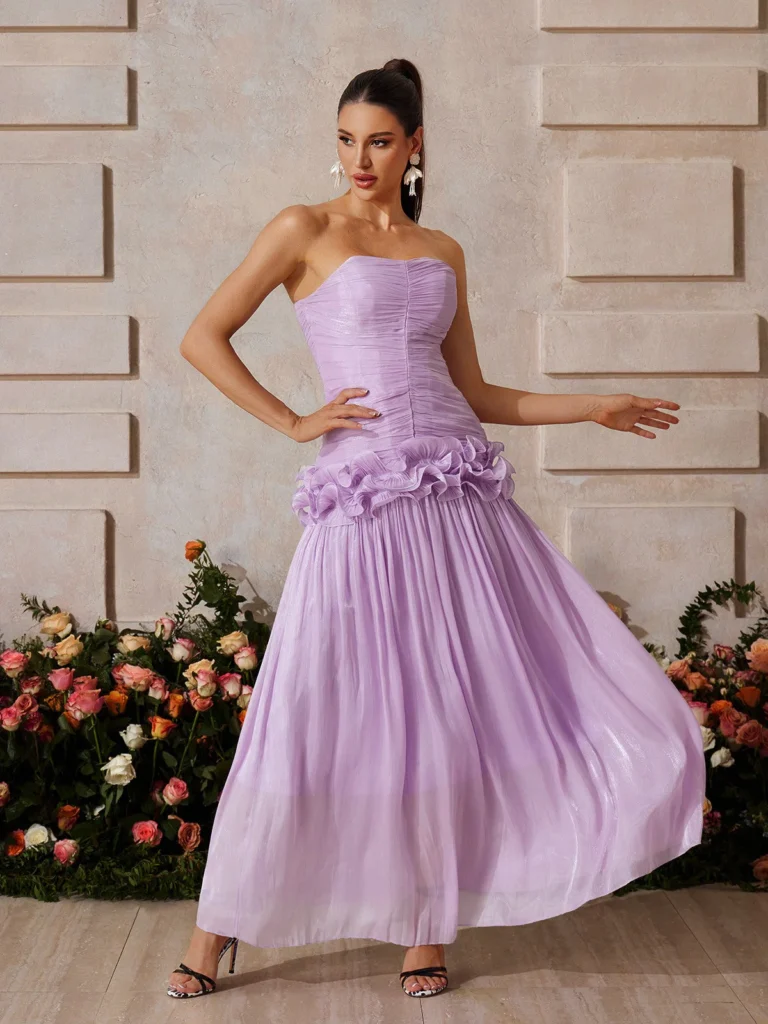
Among all texture techniques, ruched strapless dresses remain one of the most flattering and versatile options because ruching directly influences body proportions.
Ruching works by gathering fabric intentionally to create:
- Curves
- Compression
- Movement
- Waist definition
- Visual contouring
Professional designers frequently use ruching because it flatters multiple body shapes while adding softness to structured gowns.
How Ruching Slims the Waist
Diagonal ruching naturally draws the eye inward.
This creates the illusion of:
- Narrower waists
- More defined curves
- Softer midsections
- Sculpted silhouettes
because the gathered fabric disrupts flat visual surfaces.
This technique works especially well in:
- Corset gowns
- Satin dresses
- Mermaid silhouettes
- Structured strapless dresses
where waist emphasis becomes a focal point.
Diagonal vs Horizontal Ruching
Different ruching directions create completely different effects.
Diagonal ruching:
- Slims the waist
- Elongates the torso
- Creates elegant movement
- Softens curves naturally
Horizontal ruching:
- Adds width
- Creates volume
- Enhances curves
- Draws attention outward
Professional designers choose ruching direction carefully depending on the desired silhouette outcome.
Best Body Types for Ruched Dresses
Ruching flatters many body types because it creates flexibility in visual shaping.
It works especially well for:
- Curvy figures
- Athletic body shapes
- Straight silhouettes
- Hourglass proportions
because the texture adds softness and contour.
Many shoppers also prefer ruching because it:
- Feels comfortable
- Hides wrinkles
- Enhances movement
- Adds visual richness
without requiring heavy embellishment.
When Ruching Can Add Too Much Volume
Not all ruching placement is automatically flattering.
Excessive fabric gathering around:
- The hips
- Lower stomach
- Bust area
may unintentionally add bulk.
Professional stylists usually recommend:
- Controlled ruching
- Strategic placement
- Balanced fabric tension
rather than excessive draping.
The goal is sculpting the silhouette, not overwhelming it.
Corset Inspired Ruching Trends
Modern corset fashion increasingly combines:
- Structured boning
- Soft ruching
- Draped satin
- Sculpted fabrics
to create elegant body contouring.
This combination feels:
- Romantic
- Fashion forward
- Red carpet inspired
- Feminine
- Sophisticated
without becoming overly theatrical.
BareMuse integrates modern ruching techniques into structured strapless gowns to create flattering silhouettes that feel dimensional while remaining refined and wearable.
Pleated Strapless Dresses and Movement
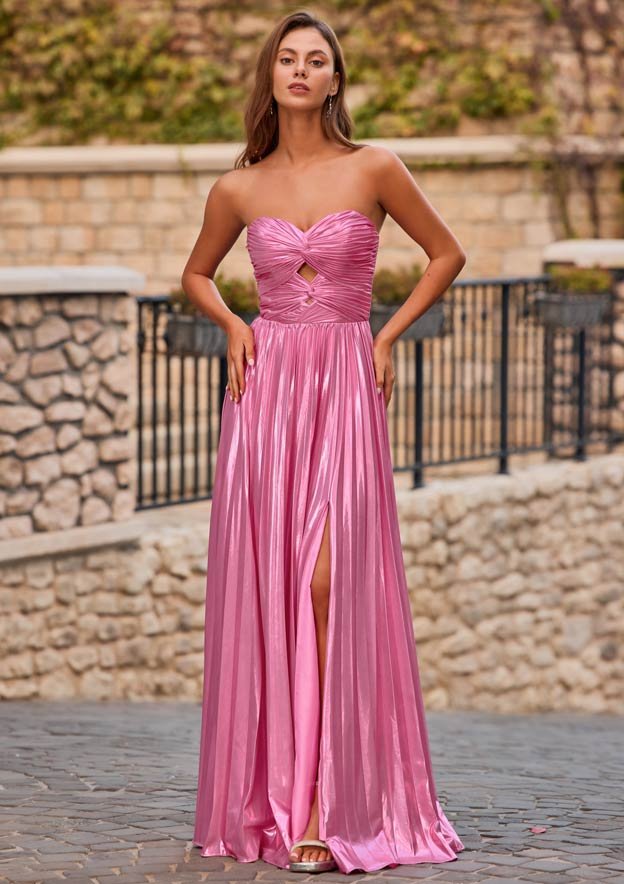
Few texture techniques transform movement as beautifully as pleating. Within pleated prom dresses, the texture itself becomes part of how the gown interacts with:
- Light
- Motion
- Photography
- Body proportions
Pleats create elegance because they move dynamically while maintaining structure.
Soft Pleats vs Structured Pleats
Different pleat types create entirely different aesthetics.
Soft pleats:
- Feel romantic
- Create fluid movement
- Add softness
- Enhance femininity
Structured pleats:
- Feel architectural
- Create sharper silhouettes
- Add drama
- Emphasize couture styling
The choice depends heavily on:
- Body proportions
- Personal style
- Desired silhouette energy
How Pleats Affect Height and Shape
Vertical pleats naturally elongate the body because they guide the eye upward and downward continuously.
This makes pleated gowns especially flattering for:
- Petite girls
- Short torsos
- Compact frames
Meanwhile, large horizontal pleats may visually widen certain areas.
Professional stylists carefully evaluate:
- Pleat direction
- Scale
- Fabric weight
- Placement
before recommending pleated silhouettes.
Best Pleated Dresses for Petite Girls
Petite shoppers often benefit most from:
- Narrow pleats
- Vertical movement
- Lightweight pleating
- Controlled volume
because oversized pleats may overwhelm smaller frames.
Elegant pleated satin gowns frequently create:
- Height illusion
- Elongated lines
- Sophisticated movement
- Slimmer visual proportions
when properly tailored.
Flowy Pleats vs Architectural Pleats
Flowy pleats feel:
- Romantic
- Soft
- Feminine
- Ethereal
while architectural pleats feel:
- Editorial
- Modern
- Sculptural
- High fashion
Both aesthetics remain popular within dimensional prom dress designs, but they communicate very different visual personalities.
Why Pleats Feel Luxurious in Motion
One reason pleated gowns feel expensive is because movement becomes part of the visual experience.
As the wearer walks, pleats create:
- Light variation
- Shadow depth
- Fabric rhythm
- Dynamic elegance
This creates the sophisticated movement often associated with couture formalwear.
BareMuse incorporates carefully balanced pleating techniques into modern strapless evening gowns to create silhouettes that feel graceful both in motion and in photography.
3D Floral Strapless Dresses: Romantic or Overwhelming?
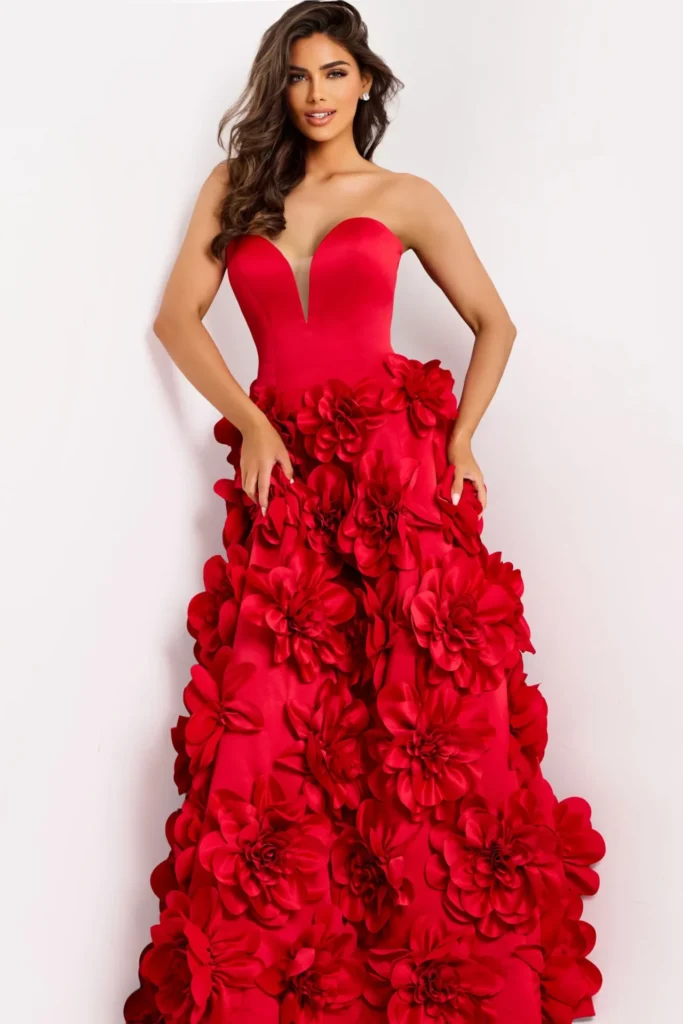
Among all modern texture trends, 3D floral dresses create some of the strongest visual impact because they add physical dimension directly onto the gown surface. Unlike printed florals, three dimensional appliqué changes both:
- Silhouette perception
and - Surface depth
This creates gowns that feel:
- Romantic
- Couture inspired
- Feminine
- Artistic
- Editorial
However, floral textures also require careful balance because excessive appliqué can quickly overwhelm the silhouette.
The Rise of Floral Appliqué Formalwear
Modern formalwear increasingly incorporates:
- Organza florals
- Sculpted petals
- Embroidered blooms
- Layered appliqué
- Dimensional lace flowers
because these details create couture inspired elegance without relying entirely on sequins or heavy embellishment.
Celebrity stylists frequently choose floral appliqué gowns because they photograph beautifully under:
- Red carpet lighting
- Editorial photography
- Flash photography
- Outdoor shoots
The shadows created by layered florals give dresses greater depth and richness.
Strategic Floral Placement and Body Balance
Professional designers rarely place floral textures randomly.
Placement dramatically affects:
- Shoulder width
- Bust proportions
- Waist emphasis
- Hip balance
- Vertical movement
For example:
- Florals around the neckline widen the upper body
- Waist florals emphasize curves
- Vertical floral placement elongates the figure
- Hip appliqué creates fuller silhouettes
This is why textured strapless dresses often feel visually sculpted even without dramatic tailoring.
How 3D Florals Affect Shoulder and Bust Proportions
Large floral appliqué near the neckline draws immediate attention upward.
This can help:
- Balance pear shaped figures
- Add volume to smaller busts
- Create softer shoulder framing
- Add romantic structure
However, oversized florals may overwhelm:
- Petite frames
- Narrow shoulders
- Smaller torsos
Professional stylists usually evaluate floral scale carefully before recommending dimensional gowns.
When Floral Textures Become Too Heavy
Too many layered florals may:
- Distort proportions
- Add unnecessary bulk
- Hide waist definition
- Reduce silhouette clarity
Especially in structured strapless gowns, texture overload may compete with the architecture of the dress itself.
Stylists often recommend balancing dramatic floral detailing with:
- Cleaner silhouettes
- Controlled accessories
- Minimal jewelry
- Softer hairstyles
to preserve elegance.
Modern Ways to Wear Floral Strapless Dresses
Modern styling approaches usually keep floral dresses sophisticated by balancing texture with restraint.
Popular combinations include:
- Soft glam makeup
- Minimal earrings
- Sleek hairstyles
- Neutral heels
- Clean neckline styling
This prevents the look from becoming costume like or visually chaotic.
BareMuse uses floral appliqué strategically within modern 3D floral prom dresses to create romantic dimension while preserving silhouette balance and refined elegance.
Other Popular Textures in Strapless Prom Dresses
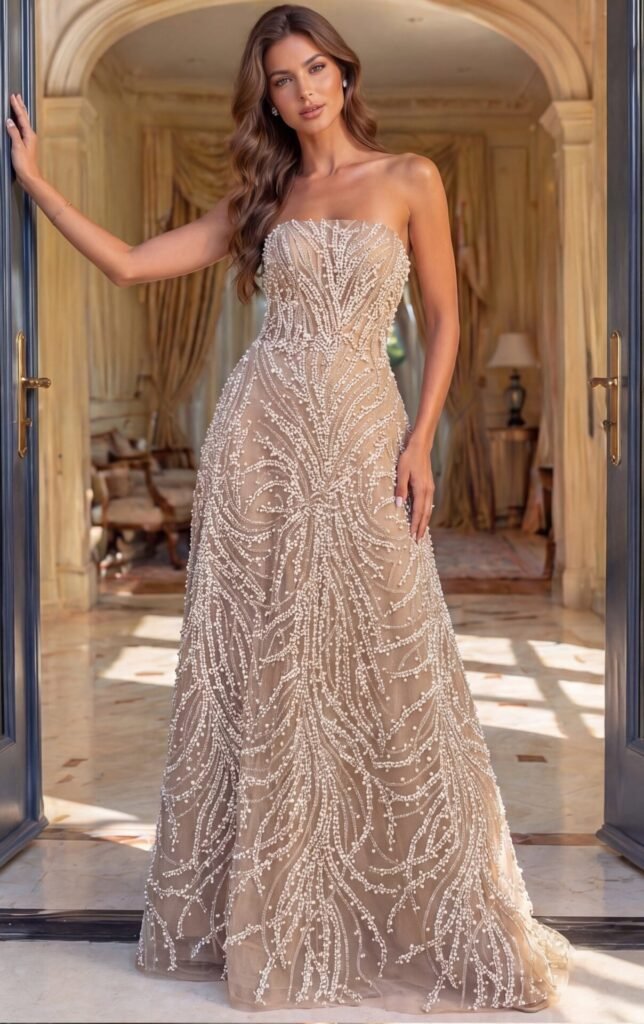
Beyond ruching, pleats, and florals, modern textured evening gowns incorporate many other dimensional techniques that influence silhouette perception and overall styling energy.
Sequins and Metallic Textures
Sequins remain one of the boldest texture categories because they reflect light dramatically.
Metallic textures create:
- High visibility
- Glamorous energy
- Strong photography impact
- Red carpet drama
However, heavy sequins can also:
- Add visual weight
- Widen body proportions
- Emphasize structure strongly
Professional stylists often recommend strategic sequin placement rather than full surface embellishment for more balanced elegance.
Feather Details
Feathers create:
- Movement
- Softness
- Couture energy
- Editorial styling
Modern feather placement usually appears:
- Along hems
- At neckline edges
- Around slits
- Within shoulder detailing
because controlled placement maintains sophistication more effectively than excessive feather coverage.
Jacquard and Embossed Fabrics
Jacquard fabrics create texture through woven structure rather than surface embellishment.
These fabrics feel:
- Luxurious
- Architectural
- Structured
- Refined
because the texture becomes integrated directly into the fabric itself.
Embossed textures work beautifully within:
- Minimalist gowns
- Old money aesthetics
- Quiet luxury formalwear
- Structured silhouettes
Layered Tulle Textures
Layered tulle creates:
- Soft volume
- Romantic movement
- Ethereal structure
- Dreamlike elegance
This texture works especially well for:
- Ball gowns
- A-line dresses
- Fairycore aesthetics
- Romantic formalwear styling
However, excessive tulle layering may visually overwhelm petite figures if not balanced carefully.
Mixed Texture Evening Gowns
Some of the most modern dimensional dress designs combine multiple textures together.
Examples include:
- Satin with floral appliqué
- Ruching with sequins
- Pleats with corset structure
- Jacquard with soft draping
This layered approach creates richer visual depth while maintaining sophistication when executed thoughtfully.
BareMuse carefully balances texture combinations to ensure dimensional detailing enhances rather than overwhelms the silhouette.
How to Choose the Right Texture for Your Body Type
Texture placement directly affects body proportions, which is why understanding silhouette balance matters so much within Textured Strapless Dresses.
Professional stylists evaluate:
- Frame size
- Shoulder width
- Waist definition
- Hip balance
- Height proportions
before recommending specific textures.
Textures for Petite Frames
Petite shoppers often benefit from:
- Vertical ruching
- Narrow pleats
- Lightweight textures
- Smaller floral appliqué
because oversized texture may overwhelm smaller proportions.
Slimming texture strategies include:
- Controlled draping
- Soft satin ruching
- Minimal dimensional detailing
- Elongating pleat placement
Textures for Curvy Figures
Curvier silhouettes often pair beautifully with:
- Diagonal ruching
- Structured draping
- Strategic corset textures
- Controlled pleating
because these details enhance waist definition naturally.
Professional stylists usually avoid:
- Excessive bulk
- Overly stiff fabrics
- Heavy appliqué clustering
which may disrupt silhouette balance.
Textures for Athletic Shapes
Athletic body types often benefit from textures that create:
- Softness
- Curves
- Romantic dimension
- Volume variation
Popular options include:
- Floral appliqué
- Draped ruching
- Layered textures
- Soft pleats
These techniques help create more contour visually.
Balancing Broad Shoulders and Narrow Hips
Texture placement can visually rebalance proportions.
For example:
- Hip textures create fuller lower silhouettes
- Waist ruching narrows the torso visually
- Vertical pleats elongate proportions
- Lower skirt volume balances broad shoulders
Designers strategically use texture to guide visual focus throughout the silhouette.
Creating Curves With Strategic Texture
Many modern body shaping dresses rely more on texture placement than extreme tailoring.
Strategic ruching and draping can create:
- Waist definition
- Fuller hips
- Softer curves
- Balanced silhouettes
without sacrificing comfort or movement.
BareMuse uses texture intentionally within modern strapless gowns to support multiple body shapes while maintaining refined elegance and flattering structure.
How Texture Changes Formal Styling
Textured dresses affect far more than the gown itself. Once texture becomes part of the outfit, every styling decision must adjust accordingly.
Accessory Balance With Textured Dresses
Highly textured gowns usually pair best with:
- Simpler jewelry
- Cleaner shoes
- Controlled accessories
- Minimal metallic layering
because the dress already creates strong visual interest.
Professional stylists often reduce accessory intensity when working with:
- Sequins
- Florals
- Dramatic ruching
- Heavy pleating
to maintain visual harmony.
Hairstyles That Work With Dimensional Gowns
Textured gowns often pair beautifully with:
- Sleek buns
- Soft waves
- Polished ponytails
- Controlled updos
These hairstyles help balance the complexity of dimensional dresses.
Extremely textured hairstyles combined with heavily textured gowns may feel visually overwhelming.
Makeup Pairing for Dramatic Textures
Makeup styling usually depends on the energy of the dress texture.
For example:
- Romantic florals pair beautifully with glowing skin
- Metallic textures support stronger glam makeup
- Architectural pleats often suit minimalist beauty styling
The goal is maintaining cohesion between:
- Fabric texture
- Hair styling
- Makeup intensity
- Overall silhouette energy
When Minimal Accessories Work Best
One major principle within textured formal dresses is understanding when restraint creates more luxury.
Sometimes:
- Clean earrings
- Neutral heels
- Soft makeup
- Elegant posture
allow the gown itself to remain the centerpiece.
This balance often creates more sophisticated formalwear styling than excessive accessorizing.
BareMuse encourages intentional styling choices that support the dimensional beauty of textured gowns while preserving elegance and proportion balance.
Why BareMuse Uses Texture Strategically in Strapless Dresses
BareMuse approaches texture through the philosophy that dimensional detailing should enhance the silhouette rather than overpower it.
Balancing Texture Without Overwhelming the Silhouette
BareMuse carefully controls:
- Texture scale
- Placement
- Fabric weight
- Surface balance
to ensure the gown remains:
- Elegant
- Wearable
- Sophisticated
- Visually balanced
rather than excessively theatrical.
Modern Ruching and Corset Construction
BareMuse integrates:
- Sculpted ruching
- Structured corsetry
- Draped satin
- Soft contouring
to create flattering silhouettes that feel both modern and timeless.
Elegant Floral Details Inspired by Couture Fashion
BareMuse floral appliqué designs focus on:
- Controlled placement
- Lightweight dimension
- Romantic elegance
- Refined texture layering
instead of excessive embellishment.
Creating Flattering Shapes Through Fabric Placement
Every texture decision within BareMuse gowns considers:
- Waist emphasis
- Shoulder balance
- Movement quality
- Photography appearance
- Body proportion harmony
This creates structured strapless gowns that feel visually sculpted while remaining comfortable and wearable.
Finding the Right Textured Dress for Your Personal Style
Some shoppers prefer:
- Romantic floral elegance
- Editorial pleating
- Dramatic ruching
- Quiet luxury texture
- Modern sculptural silhouettes
BareMuse offers multiple dimensional styling directions while maintaining refined craftsmanship and elegant proportion balance.
Conclusion
The rise of Textured Strapless Dresses reflects the growing desire for formalwear that feels visually dynamic, emotionally expressive, and intentionally designed. Texture transforms how gowns:
- Move
- Reflect light
- Shape the body
- Frame proportions
- Communicate personal style
which is why dimensional fashion continues dominating modern prom and eveningwear trends.
Whether through:
- Sculpted ruching
- Architectural pleats
- Romantic floral appliqué
- Metallic textures
- Layered fabrics
texture gives gowns greater depth and individuality while allowing designers to shape silhouettes in highly strategic ways.
Professional stylists understand that successful texture styling depends on balance. The right texture can:
- Slim the waist
- Add curves
- Elongate proportions
- Enhance movement
- Elevate elegance
while excessive or poorly placed texture may overwhelm the silhouette.
BareMuse designs modern textured strapless prom dresses with careful attention to:
- proportion balance
- fabric structure
- dimensional elegance
- flattering texture placement
so shoppers can experience couture inspired detail while maintaining timeless sophistication and wearable beauty.