Choosing the right fabric is one of the most important decisions when shopping for a strapless gown because fabric determines how the dress fits, supports, moves, photographs, and maintains structure throughout the night. Many shoppers focus only on silhouette or color, but Which Fabric Holds a Strapless Shape Better is often the real factor behind whether a gown feels secure and flattering. Some fabrics naturally provide stronger support and sculpting, while others prioritize softness and movement. This is why two dresses with the same neckline can feel completely different once worn. Understanding the strengths and limitations of satin, chiffon, and stretch knit helps shoppers make smarter formalwear decisions while avoiding discomfort or fit problems during prom or evening events.
This guide from BareMuse explores satin vs chiffon vs stretch knit, comparing how each fabric performs within strapless dress construction, silhouette stability, comfort, movement, body contouring, and long wearability. This article explains the engineering behind structured prom dress fabrics, the softness of chiffon strapless gowns, and the flexibility of stretch knit formal dresses while helping readers understand which fabric works best for different body types and styling goals. BareMuse will also break down how fabric weight, draping, stretch recovery, and internal structure influence overall support in modern strapless fashion.
Why Fabric Matters in Strapless Dress Construction
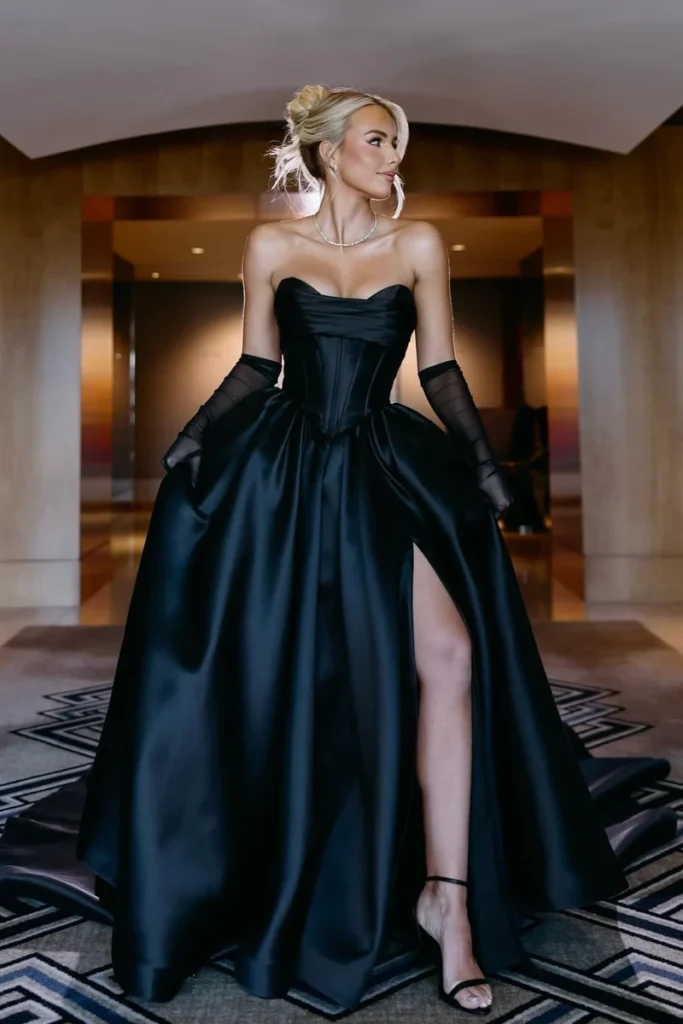
Within formalwear, fabric is not simply decorative. Fabric determines how a strapless gown:
- Holds shape
- Supports the bust
- Balances proportions
- Moves naturally
- Responds to body heat
- Photographs under lighting
- Maintains structure throughout wear
This becomes even more important in strapless dresses because there are no shoulder straps helping stabilize the garment.
Professional designers must rely entirely on:
- Fabric strength
- Internal corsetry
- Boning
- Grip construction
- Bodice engineering
to keep the gown secure.
How Fabric Affects Support
Some fabrics naturally resist collapsing while others drape softly and require more internal structure.
For example:
- Satin holds architectural shape well
- Chiffon flows softly and needs support layers
- Stretch knit molds to the body but may lose firmness
This is why best fabric for strapless dresses depends heavily on:
- Body shape
- Bust support needs
- Desired silhouette
- Comfort preferences
- Event duration
The stronger the fabric structure, the easier it becomes to maintain neckline stability.
The Relationship Between Structure and Comfort
One common misconception is that stronger fabrics automatically feel less comfortable.
In reality, professionally engineered supportive strapless gowns balance:
- Stability
- Breathability
- Stretch
- Weight distribution
- Softness
A properly structured satin dress may actually feel more secure and comfortable than a loose chiffon gown constantly requiring adjustment.
Comfort in strapless fashion depends more on:
- Construction quality
than - Softness alone.
Why Strapless Dresses Need Different Engineering
Strapless dresses face unique challenges because gravity constantly pulls the bodice downward.
This means the gown must:
- Anchor securely at the waist
- Stabilize the bust
- Resist slipping
- Maintain neckline tension
Different fabrics react differently under this pressure.
Professional designers often combine:
- Fabric structure
- Corset construction
- Stretch panels
- Silicone grip lining
- Boning
to support the gown effectively.
Fabric Weight vs Silhouette Stability
Heavier fabrics usually hold shape more effectively, but excessive weight may reduce comfort and flexibility.
Lighter fabrics feel airy and romantic but may:
- Collapse more easily
- Shift during movement
- Require stronger internal support
The ideal balance depends on:
- Event type
- Personal comfort
- Body proportions
- Desired aesthetic
BareMuse carefully evaluates fabric weight and internal construction together when designing modern structured strapless gowns that feel secure while remaining elegant and wearable.
Satin Strapless Dresses: Elegant Structure and Sculpted Support
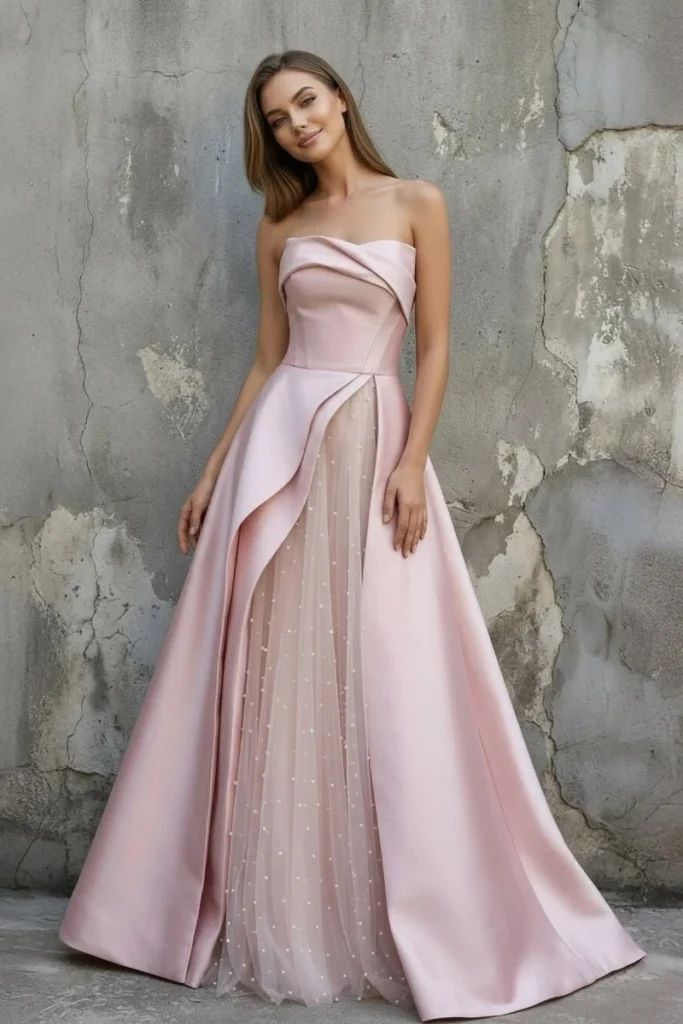
Among all major formalwear fabrics, satin remains one of the strongest choices for structured strapless silhouettes because it naturally maintains shape while creating luxurious visual depth.
This is why satin strapless dresses continue dominating:
- Red carpet fashion
- Couture formalwear
- Quiet luxury aesthetics
- Structured prom trends
Why Satin Holds Shape So Well
Satin holds shape effectively because of:
- Dense weaving
- Smooth tension
- Moderate stiffness
- Structured drape
Unlike softer fabrics that collapse against the body, satin creates cleaner architectural lines.
This helps:
- Support the neckline
- Define the waist
- Maintain bodice structure
- Sculpt silhouette proportions
Professional designers often use satin for:
- Corset gowns
- Mermaid dresses
- Sculpted silhouettes
- Minimalist formalwear
because the fabric naturally supports construction techniques.
Structured Satin vs Soft Satin
Not all satin behaves the same way.
Structured satin:
- Feels thicker
- Maintains stronger shape
- Creates sharper silhouettes
- Supports corsetry well
Soft satin:
- Drapes more fluidly
- Feels romantic
- Moves softly
- Creates gentler silhouettes
Professional stylists evaluate satin type carefully depending on the desired aesthetic.
Best Satin Styles for Strapless Gowns
Satin works especially well for:
- Corset bodices
- Clean minimalist dresses
- Mermaid gowns
- Sculpted A-line silhouettes
- Structured evening gowns
because the fabric enhances silhouette clarity.
This is one reason satin frequently appears within:
- Old money aesthetics
- Quiet luxury fashion
- Red carpet inspired prom trends
Potential Downsides of Satin
Despite its strengths, satin also presents challenges.
Potential concerns include:
- Wrinkling visibility
- Heat retention
- Fingerprint visibility
- Shine emphasizing body contours
- Limited flexibility in some weaves
Improperly tailored satin may also reveal fit imperfections more clearly because of its reflective surface.
Who Looks Best in Satin Strapless Dresses
Satin works beautifully for shoppers seeking:
- Waist definition
- Structured silhouettes
- Elegant posture enhancement
- Sculpted body lines
It often flatters:
- Hourglass figures
- Athletic shapes
- Tall frames
- Balanced body proportions
especially when paired with strong internal construction.
BareMuse uses premium satin construction techniques within modern structured prom dress fabrics to create gowns that balance elegance, support, and refined silhouette shaping.
Chiffon Strapless Dresses: Soft Movement and Romantic Flow
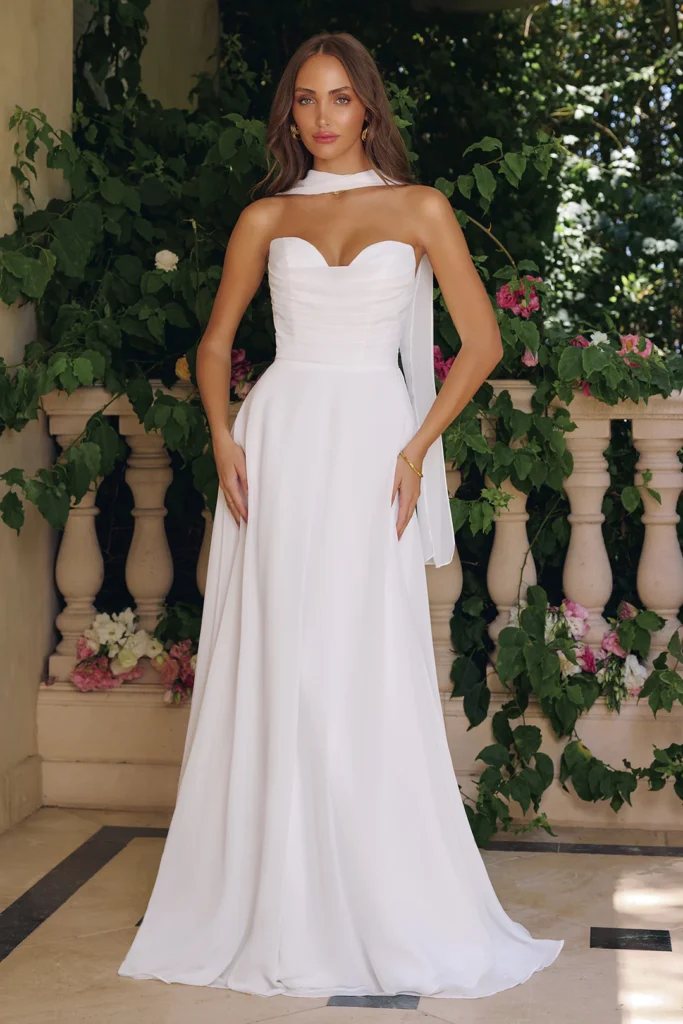
While satin emphasizes structure, chiffon strapless gowns focus on softness, movement, and ethereal elegance.
Chiffon remains popular because it creates:
- Romantic silhouettes
- Airy movement
- Lightweight comfort
- Feminine softness
- Dreamlike flow
Why Chiffon Feels Lightweight
Chiffon uses lightweight weaving that allows:
- Air circulation
- Fluid movement
- Soft draping
- Gentle layering
This makes chiffon especially attractive for:
- Warm weather events
- Outdoor prom photography
- Garden aesthetics
- Romantic styling
Many shoppers love chiffon because it feels less restrictive than heavily structured fabrics.
The Challenge of Supporting Chiffon Strapless Gowns
The softness that makes chiffon beautiful also creates structural challenges.
Because chiffon lacks natural rigidity, strapless chiffon gowns usually require:
- Internal corsetry
- Boning
- Multiple layers
- Built-in cups
- Stabilized linings
without these elements, the bodice may collapse or shift during wear.
This explains why high quality chiffon gowns rely heavily on invisible engineering.
Layered Chiffon vs Single Layer Chiffon
Layering dramatically changes chiffon performance.
Single layer chiffon:
- Feels extremely light
- Moves fluidly
- Offers minimal support
- Appears delicate
Layered chiffon:
- Adds structure
- Improves silhouette stability
- Creates richer movement
- Enhances volume control
Professional designers strategically layer chiffon to preserve softness while increasing functionality.
Best Body Types for Chiffon Dresses
Chiffon often flatters:
- Petite figures
- Pear shaped bodies
- Romantic aesthetics
- Soft body lines
because the fabric skims rather than compresses.
Chiffon also works beautifully for shoppers who prefer:
- Gentle movement
- Less body contour emphasis
- Feminine softness
- Airy silhouettes
When Chiffon Works Beautifully for Strapless Styles
Chiffon performs best when combined with:
- Structured bodices
- Corset foundations
- Layered skirts
- Strategic draping
This combination allows the gown to feel romantic while remaining secure.
BareMuse incorporates layered chiffon engineering into modern strapless evening gowns to create graceful movement without sacrificing silhouette stability.
Stretch Knit Strapless Dresses: Comfort vs Structure
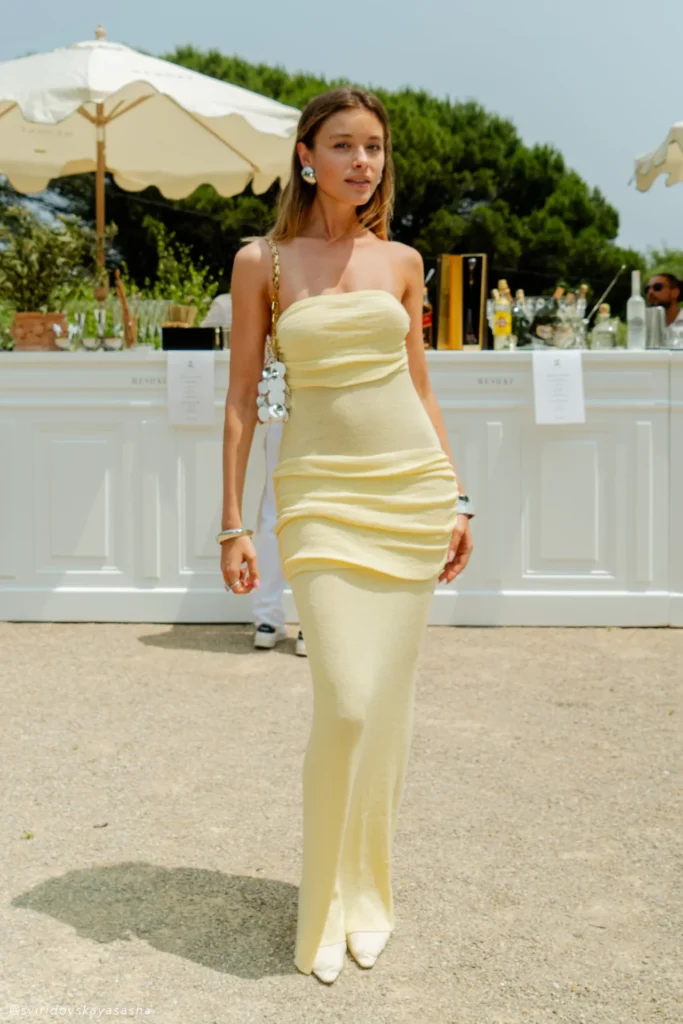
Among modern formalwear fabrics, stretch knit formal dresses are often chosen for comfort because they mold closely to the body while allowing flexibility and movement. Unlike satin or chiffon, stretch knit relies heavily on elasticity rather than rigid structure.
This creates gowns that feel:
- Comfortable
- Flexible
- Body contouring
- Modern
- Wearable for long events
However, the same stretch that creates comfort may also reduce long term silhouette stability if the fabric quality or construction is weak.
Why Stretch Knit Feels Comfortable
Stretch knit fabrics contain elasticity that allows the dress to:
- Adapt to movement
- Expand naturally while sitting or dancing
- Reduce restriction
- Feel softer against the body
This is why many shoppers prefer stretch fabrics for:
- Long prom nights
- Dancing
- Warm venues
- Extended wear events
Compared to highly structured satin, stretch knit often feels less rigid and easier to move in throughout the evening.
How Stretch Fabrics Shape the Body
One advantage of stretch knit is body contouring.
The fabric naturally follows curves and creates:
- Smooth body lines
- Close fitting silhouettes
- Sculpted waist appearance
- Flexible shaping
This makes stretch knit especially popular for:
- Mermaid gowns
- Bodycon silhouettes
- Minimalist dresses
- Sleek modern formalwear
High quality stretch knit can visually smooth proportions while remaining comfortable.
The Risk of Losing Structure Over Time
One concern with lower quality stretch fabrics is shape retention.
Over time, poorly engineered stretch knit may:
- Lose elasticity
- Sag at the neckline
- Stretch unevenly
- Collapse at the bodice
- Require constant adjustment
This becomes particularly problematic in strapless dresses because neckline security depends heavily on fabric recovery strength.
Professional designers combat this issue through:
- Reinforced bodices
- Internal corsetry
- Compression lining
- Stabilized seams
- Structured bust panels
Best Stretch Knit Formal Dress Designs
Stretch knit works best when paired with silhouettes that naturally support body contouring.
Popular examples include:
- Column gowns
- Mermaid silhouettes
- Minimalist evening dresses
- Modern sculpted formalwear
- Sleek body-skimming gowns
These silhouettes allow the fabric to enhance curves while maintaining visual balance.
When Stretch Knit Works Best for Strapless Dresses
Stretch knit performs especially well for shoppers prioritizing:
- Comfort
- Flexibility
- Dance mobility
- Modern aesthetics
- Figure hugging silhouettes
However, stronger internal support becomes essential for:
- Larger bust sizes
- Heavy gowns
- Long events
- Highly fitted bodices
BareMuse combines advanced stretch technology with reinforced construction techniques to create supportive strapless gowns that feel comfortable without sacrificing silhouette structure.
Which Fabric Holds a Strapless Shape Better for Different Body Types?
No single fabric works perfectly for every body type. Choosing the best fabric for strapless dresses depends heavily on:
- Bust support needs
- Height proportions
- Waist definition
- Comfort preferences
- Desired silhouette energy
Professional stylists evaluate both:
- Fabric behavior
and - Body balance
before recommending specific materials.
Best Fabric for Small Busts
Shoppers with smaller busts often have greater flexibility in fabric choice because less structural support is required.
Popular options include:
- Satin
- Chiffon
- Stretch knit
- Draped fabrics
- Soft corset styles
However, satin often creates the strongest neckline definition because of its architectural structure.
Soft chiffon may create romantic softness, while stretch knit offers sleek contouring.
Best Fabric for Curvy Figures
Curvier body types often benefit from fabrics that balance:
- Support
- Compression
- Stability
- Waist definition
Structured satin usually performs exceptionally well because it:
- Holds shape firmly
- Supports corset construction
- Defines curves elegantly
High quality stretch knit may also work beautifully when reinforced properly.
Meanwhile, extremely lightweight chiffon may require stronger internal support to maintain security.
Best Fabric for Petite Girls
Petite shoppers often benefit from fabrics that avoid excessive bulk.
Popular choices include:
- Lightweight satin
- Controlled chiffon layering
- Soft stretch knit
- Streamlined silhouettes
Heavy fabrics may visually overwhelm smaller frames if not balanced carefully.
Vertical draping and clean construction typically create the most elongating effect.
Best Fabric for Athletic Shapes
Athletic body types often pair beautifully with fabrics that soften structure and create curves visually.
Examples include:
- Draped satin
- Ruched stretch knit
- Soft chiffon layering
- Sculpted fabric movement
These materials help create:
- Waist definition
- Softer contouring
- Romantic movement
- Balanced proportions
Balancing Comfort and Support
Many shoppers assume they must choose between:
- Comfort
or - Structure
In reality, professionally designed gowns combine both.
The strongest formalwear engineering balances:
- Fabric quality
- Internal support
- Flexibility
- Breathability
- Shape retention
BareMuse carefully matches fabric types to silhouette architecture so shoppers can enjoy both comfort and stability within modern strapless dress construction.
How Fabric Changes the Overall Aesthetic
Fabric affects not only support, but also the emotional and visual energy of a gown. The same silhouette appears completely different depending on material choice.
Quiet Luxury Satin Looks
Satin naturally communicates:
- Elegance
- Sophistication
- Wealth
- Structure
- Red carpet glamour
This is why satin dominates:
- Quiet luxury aesthetics
- Minimalist formalwear
- Old money fashion
- Sculpted eveningwear
Its reflective surface creates luxurious visual depth without requiring heavy embellishment.
Romantic Chiffon Styling
Chiffon creates softer emotional energy.
It feels:
- Feminine
- Dreamlike
- Ethereal
- Romantic
- Delicate
This makes chiffon especially popular for:
- Garden prom themes
- Fairytale aesthetics
- Soft glam styling
- Flowing silhouettes
Chiffon photographs beautifully in motion because of its airy drape.
Modern Stretch Knit Minimalism
Stretch knit creates sleek modernity.
Its close fit and fluid contouring support:
- Contemporary minimalism
- Sculpted silhouettes
- Clean fashion aesthetics
- Modern glamour
Stretch fabrics often appeal to shoppers seeking wearable elegance without excessive structure.
How Fabric Changes Movement and Photography
Different fabrics respond differently to:
- Walking
- Dancing
- Lighting
- Photography
- Flash reflection
For example:
- Satin reflects light dramatically
- Chiffon moves softly
- Stretch knit creates body definition
- Layered fabrics create depth
Professional stylists consider fabric behavior carefully because movement strongly influences how gowns appear both in person and in photographs.
BareMuse selects fabrics intentionally to ensure each gown maintains elegance across movement, lighting, and long event wear.
What Stylists Recommend for Long Events Like Prom
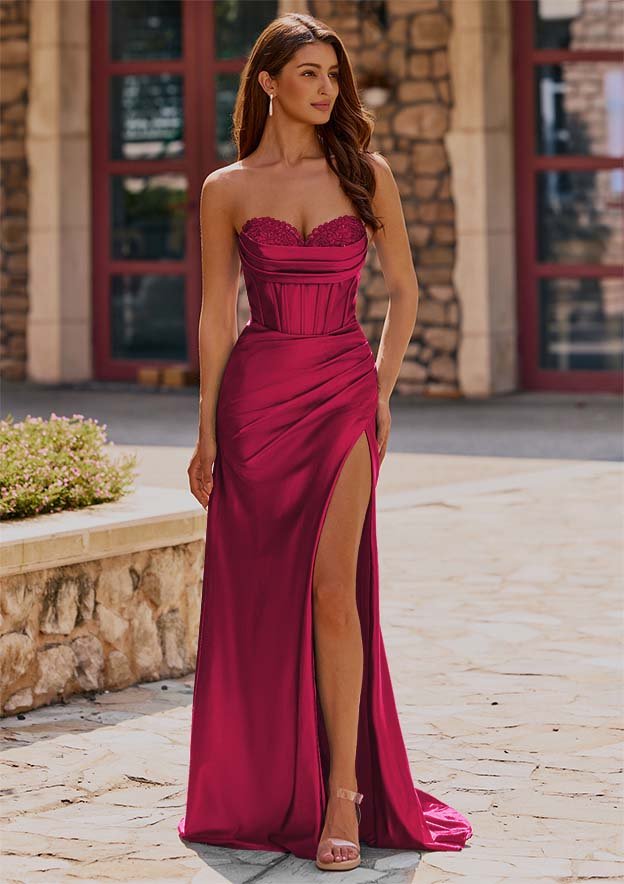
Professional stylists rarely evaluate dresses based only on appearance. Prom and formal events often last many hours, making functionality equally important.
Comfort Throughout the Night
Long events require fabrics that support:
- Sitting
- Walking
- Dancing
- Temperature changes
- Continuous movement
Stretch knit often feels most comfortable for active wear, while structured satin may provide greater security and posture support.
Heat, Sweat, and Fabric Breathability
Breathability matters more than many shoppers realize.
Satin:
- May retain heat
- Feels luxurious but warmer
Chiffon:
- Allows airflow
- Feels lightweight
Stretch knit:
- Varies depending on blend quality
Professional stylists consider venue temperature carefully when recommending fabrics.
Wrinkling and Movement Concerns
Each fabric responds differently to wear stress.
Satin:
- Wrinkles visibly
- Maintains structure well
Chiffon:
- Hides wrinkles naturally
- May shift easily
Stretch knit:
- Resists wrinkles
- May lose tension if overstretched
These factors strongly affect long event performance.
Which Fabrics Photograph Best
Photography performance depends on:
- Light reflection
- Texture
- Drape
- Shape clarity
Satin often creates the most luxurious editorial effect because of its reflective surface and architectural structure.
Chiffon creates beautiful movement photography, while stretch knit enhances body contouring in sleek silhouettes.
The Best Balance Between Structure and Wearability
Many modern gowns combine multiple fabrics together.
Examples include:
- Satin bodices with chiffon skirts
- Stretch lining beneath structured satin
- Chiffon overlays with corset foundations
These hybrid designs create better balance between:
- Comfort
- Structure
- Movement
- Stability
BareMuse integrates multi fabric engineering techniques into modern supportive prom dress fabrics to maximize both elegance and wearability.
How BareMuse Selects Fabrics for Strapless Dresses
BareMuse approaches fabric selection through both aesthetic and engineering perspectives.
Balancing Structure and Comfort
Every BareMuse gown is designed to balance:
- Silhouette stability
- Comfort
- Breathability
- Movement
- Wearability
rather than prioritizing appearance alone.
Premium Satin Construction Techniques
BareMuse uses structured satin selectively to create:
- Sculpted bodices
- Elegant waist definition
- Clean silhouettes
- Luxury visual depth
while integrating comfort focused internal support systems.
Layered Chiffon Engineering
BareMuse chiffon gowns incorporate:
- Multi layer construction
- Stabilized bodices
- Controlled draping
- Reinforced corsetry
to preserve softness while improving functionality.
Modern Stretch Fabric Technology
BareMuse also incorporates advanced stretch fabrics that maintain:
- Shape recovery
- Compression balance
- Flexibility
- Long wear comfort
without losing silhouette integrity.
Finding the Right Fabric for Your Personal Style
Some shoppers prioritize:
- Quiet luxury satin elegance
- Romantic chiffon softness
- Modern stretch comfort
- Structured sculpted silhouettes
BareMuse offers multiple fabric directions while maintaining refined construction and supportive formalwear engineering.
Conclusion
When comparing satin vs chiffon vs stretch knit, the answer to Which Fabric Holds a Strapless Shape Better ultimately depends on what the wearer values most within a formal gown. Each fabric offers distinct advantages in terms of:
- Support
- Comfort
- Structure
- Movement
- Aesthetic energy
- Long wear functionality
Satin generally provides the strongest architectural support and silhouette stability, making it ideal for:
- Corset gowns
- Structured bodices
- Sculpted silhouettes
- Quiet luxury aesthetics
Chiffon offers unmatched softness and romantic movement but depends heavily on internal construction to maintain strapless support effectively.
Stretch knit prioritizes flexibility and comfort while contouring the body beautifully, though high quality engineering becomes essential to preserve neckline security and long term structure.
Professional stylists understand that the best formalwear decisions balance:
- Body proportions
- Event needs
- Personal comfort
- Desired silhouette
- Styling preferences
rather than choosing fabric based on trends alone.
BareMuse designs modern strapless prom dresses using carefully selected fabrics that combine elegance, support, movement, and wearable sophistication. Whether you prefer structured satin glamour, romantic chiffon softness, or sleek stretch knit minimalism, BareMuse helps shoppers find gowns that feel secure, flattering, and timeless throughout every moment of prom night.