Few evening dress styles demand more precision than Strapless Mermaid Gowns. Unlike relaxed silhouettes that skim away from the body, mermaid gowns rely on close contouring, structured compression, and carefully engineered support to create their signature shape. Every detail inside the dress affects how the silhouette performs, from posture and neckline stability to hip contouring and flare balance. Without strong internal structure, a mermaid gown can quickly lose elegance through collapsing fabric, uneven tension, or uncomfortable movement restriction. This is why understanding how boning shapes the silhouette is essential when shopping for a truly supportive strapless gown.
This guide from BareMuse explores the technical side of mermaid gown structure, including boning in mermaid dresses, internal corsetry, bust support systems, and movement engineering. This article explains how a properly designed structured mermaid gown creates smooth body contouring while maintaining comfort and stability during real wear. BareMuse combines expertise in strapless gown engineering with fashion styling insight to help readers understand why high quality internal construction transforms the way a mermaid dress fits, moves, and flatters the body.
Why Strapless Mermaid Gowns Require Strong Internal Structure
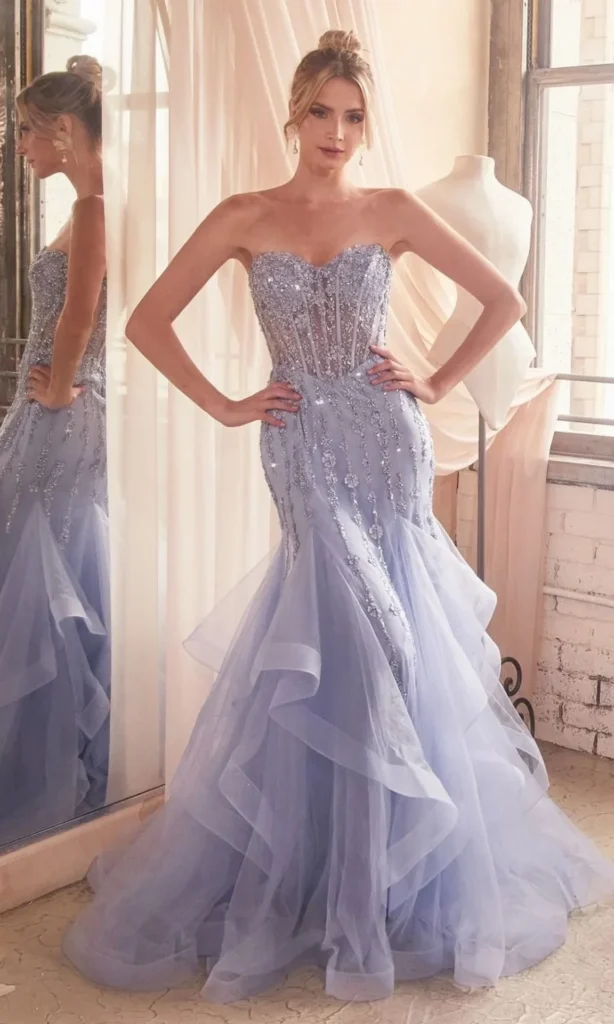
Among all formal silhouettes, mermaid gowns place some of the highest structural demands on the garment. The dress must remain stable without straps while simultaneously contouring the body closely from bust to hips before flaring outward below the thighs.
This combination requires sophisticated mermaid gown construction.
The Challenges of Strapless Silhouettes
Strapless gowns cannot rely on shoulder support. Instead, the entire garment must stabilize itself through:
- Waist anchoring
- Internal tension distribution
- Bodice engineering
- Structural reinforcement
Without proper support, gravity continuously pulls the dress downward.
This may lead to:
- Rolling necklines
- Bust instability
- Fabric collapse
- Constant pulling upward
Strong strapless mermaid dress support prevents these problems through internal architecture rather than excessive tightness.
Why Mermaid Shapes Need More Support Than A-Line Dresses
A-line silhouettes allow more freedom because the skirt flows away from the body gradually.
Mermaid gowns behave differently because they:
- Fit tightly through the torso
- Contour the hips closely
- Restrict lower-body expansion
- Depend heavily on precise tension balance
This creates greater pressure on the bodice structure.
The gown must maintain:
- Shape consistency
- Vertical support
- Posture alignment
- Smooth contouring
throughout movement.
The Relationship Between Fit and Gravity
In how mermaid dresses fit the body, gravity becomes one of the most important engineering considerations.
The dress constantly experiences downward force from:
- Fabric weight
- Movement
- Body heat
- Motion stress
Good internal structure redistributes this pressure throughout the garment rather than concentrating tension only at the neckline.
How Structure Prevents Slipping and Collapse
High quality internal corsetry in mermaid gowns helps stabilize the silhouette through:
- Boning channels
- Waist stays
- Compression lining
- Reinforced seams
- Structured cups
These elements create balanced support while reducing the need for painful compression.
Poorly structured gowns often depend only on tightness, which usually creates discomfort without true stability.
BareMuse prioritizes advanced support engineering because mermaid gowns require hidden structural intelligence to achieve their sculpted elegance successfully.
How Boning Shapes the Mermaid Silhouette
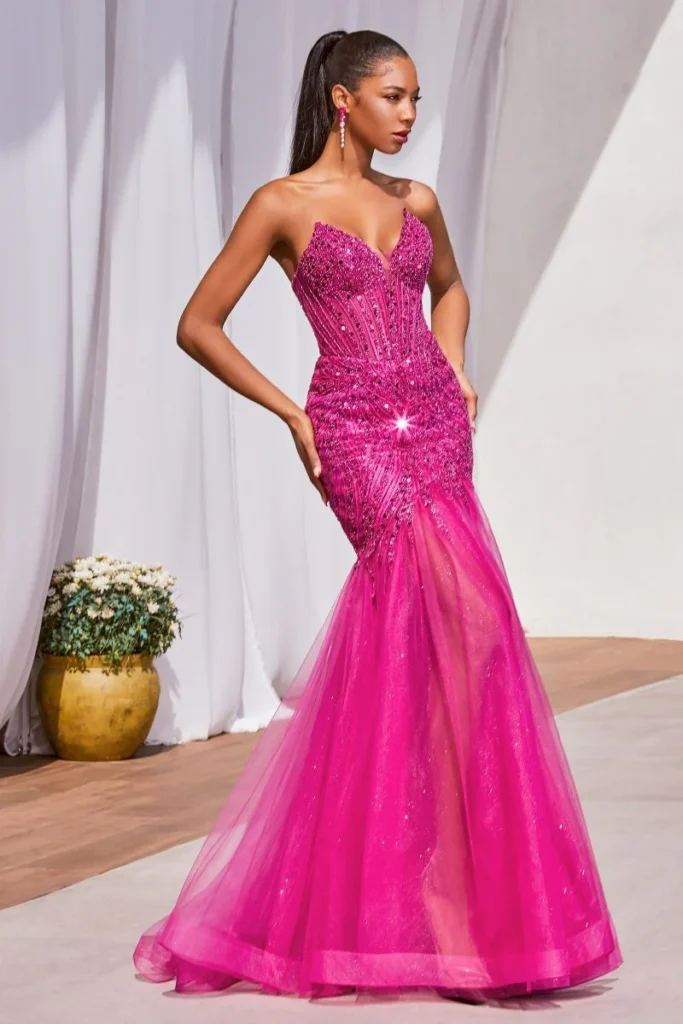
Boning functions as the skeletal framework inside the gown. Without it, the dramatic contouring associated with mermaid dresses would lose stability quickly.
This is why boning in mermaid dresses affects far more than simple support.
Creating Vertical Tension
Boning creates vertical structure throughout the bodice.
This:
- Stabilizes the neckline
- Prevents collapse
- Encourages posture
- Distributes tension evenly
Vertical reinforcement helps the gown maintain elegant lines while resisting downward pulling.
Supporting the Bust Without Straps
One of the biggest challenges in supportive strapless mermaid dresses is bust stabilization.
Boning works alongside:
- Internal cups
- Corset structure
- Compression lining
- Waist anchoring
to support the bust without shoulder straps.
This creates:
- Lift
- Shape definition
- Movement stability
- Cleaner contouring
without relying entirely on aggressive tightness.
Defining the Waistline
Strong structured bodice support sharpens waist definition by maintaining tension balance throughout the torso.
This helps create:
- Hourglass contouring
- Smooth transitions
- Elegant silhouette shaping
Weak construction may allow:
- Wrinkling
- Uneven compression
- Waist distortion
during movement.
Smoothing the Hip Transition
The transition from waist to hips defines the visual success of a mermaid silhouette.
Good boning helps:
- Smooth contour lines
- Stabilize shaping
- Prevent bunching
- Maintain symmetry
This is especially important in fitted satin and crepe gowns where construction flaws become highly visible.
Maintaining Shape During Movement
Mermaid gowns experience continuous stress while:
- Walking
- Sitting
- Turning
- Dancing
Strong strapless gown engineering allows the dress to maintain structure without becoming rigid.
Movement tested construction creates:
- Better comfort
- Cleaner posture
- Longer wearability
- Reduced adjustment
Key Signs of Strong Boning Support
Well engineered mermaid dress silhouette guide principles usually include:
- Stable neckline placement
- Smooth side seams
- Even compression
- Minimal wrinkling
- Balanced flare transition
BareMuse carefully refines internal support systems because elegant contouring should feel sculpted yet wearable throughout real movement rather than visually impressive but physically restrictive.
Different Types of Boning Used in Mermaid Gowns
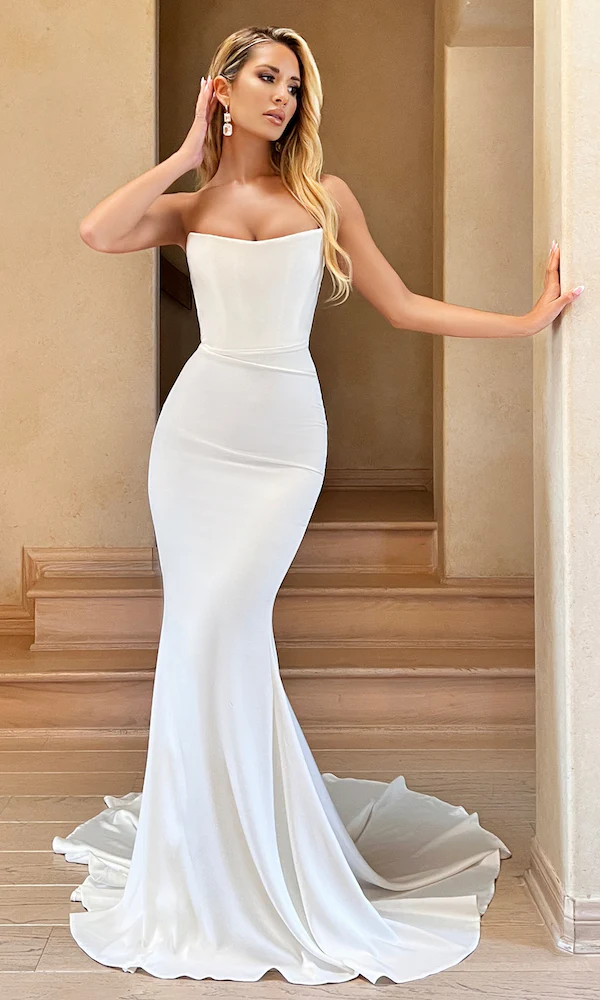
Not all support systems perform equally. Different materials affect:
- Flexibility
- Stability
- Comfort
- Long term durability
Understanding boning materials helps shoppers evaluate construction quality more accurately.
Plastic Boning
Plastic boning appears frequently in affordable formalwear because it is:
- Lightweight
- Flexible
- Inexpensive
However lower quality plastic may:
- Warp
- Bend permanently
- Lose tension
- Collapse under stress
Thin plastic support often struggles in tightly contoured mermaid gowns.
Steel Boning
Steel boning offers stronger reinforcement and improved shape retention.
Benefits include:
- Better posture support
- Stable contouring
- Strong neckline control
- Long wear durability
Steel systems are often used in:
- Couture gowns
- Luxury eveningwear
- Structured corsetry
because they maintain structural integrity more effectively.
Spiral Steel Support
Spiral steel combines support with flexibility.
Unlike rigid flat steel, spiral systems adapt better to:
- Sitting
- Twisting
- Walking
- Natural body movement
This improves comfort significantly in fitted silhouettes.
Flexible Modern Boning Systems
Advanced synthetic support materials attempt to balance:
- Comfort
- Structure
- Durability
- Movement adaptability
Modern support systems may perform extremely well when paired with thoughtful engineering.
Which Materials Feel Most Comfortable
Comfort depends on:
- Placement
- Integration
- Compression balance
- Garment fit
rather than simply the boning category itself.
A poorly engineered flexible system may feel worse than properly balanced steel support.
Boning Material Comparison
| Boning Type | Support Strength | Flexibility | Common Usage |
|---|---|---|---|
| Plastic Boning | Moderate | High | Affordable gowns |
| Flat Steel | Strong | Moderate | Structured corsetry |
| Spiral Steel | Strong | Moderate to High | Luxury formalwear |
| Modern Synthetic Systems | Moderate | High | Comfort-focused gowns |
BareMuse evaluates support systems holistically because exceptional structured mermaid gown performance depends on the relationship between materials, pattern engineering, and movement balance.
The Role of Internal Corsetry in Strapless Mermaid Gowns
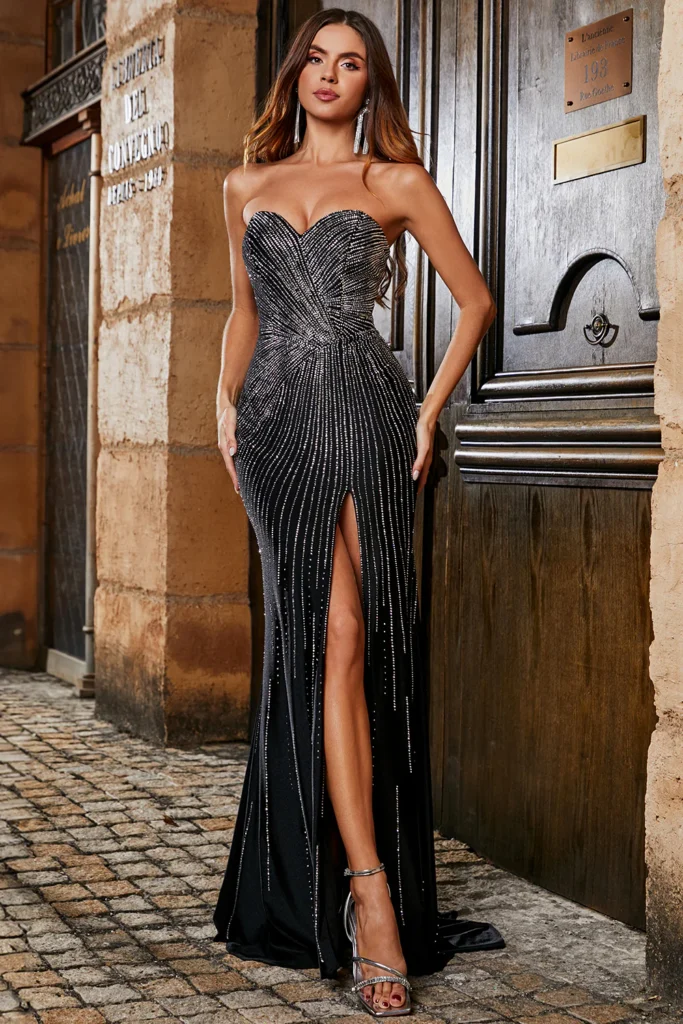
The hidden corsetry inside a gown often determines whether the dress feels secure and sculpted or unstable and uncomfortable. Many shoppers focus only on visible fabric and silhouette, but true internal corsetry in mermaid gowns is what allows the dress to maintain elegant structure during real wear.
A mermaid silhouette places continuous pressure on the bodice because the gown contours closely through the torso and hips. Without internal support systems, the neckline may collapse and the body contouring can lose precision quickly.
Hidden Waist Stays
One of the most important components in strapless mermaid dress support is the waist stay.
A waist stay is an internal band anchored around the waist that:
- Carries garment weight
- Reduces neckline tension
- Improves stability
- Prevents slipping
This shifts structural pressure away from the bust line and redistributes support more evenly throughout the torso.
Luxury gowns frequently feel more comfortable because hidden waist anchoring reduces the need for painful compression at the neckline.
Built-In Bust Support
High quality supportive strapless mermaid dresses often include:
- Molded cups
- Support mesh
- Reinforced lining
- Bust contour shaping
These systems work together with boning to stabilize the upper body naturally.
Strong bust support creates:
- Cleaner posture
- Better neckline symmetry
- More elegant shaping
- Reduced movement instability
without requiring constant adjustment.
Compression vs Balanced Support
Many shoppers incorrectly assume tighter dresses automatically provide stronger support.
In reality, balanced support matters more than aggressive compression.
Good corset structure in evening gowns should:
- Stabilize the body
- Allow comfortable breathing
- Support movement
- Maintain posture
without causing rib pain or restricted mobility.
Excessive tightness often creates:
- Bulging
- Wrinkling
- Uneven contouring
- Physical fatigue
Strong internal engineering allows the dress to feel supportive without becoming exhausting to wear.
Why Good Corsetry Improves Comfort
Thoughtful structure actually improves wearability because support becomes distributed throughout the garment rather than concentrated at isolated pressure points.
Good internal corsetry helps:
- Prevent slipping
- Reduce shoulder tension
- Stabilize movement
- Improve silhouette consistency
throughout long events.
How Luxury Gowns Distribute Weight Better
Luxury mermaid gown structure typically uses multiple support layers together, including:
- Boning channels
- Waist stays
- Compression mesh
- Reinforced seams
- Structural lining
These systems create balanced tension across the body.
The result is often:
- Better posture
- Cleaner contouring
- Smoother movement
- Longer wear comfort
BareMuse engineers internal support systems carefully because elegant mermaid gowns should feel secure and refined rather than overly restrictive.
How Mermaid Gowns Should Fit the Body
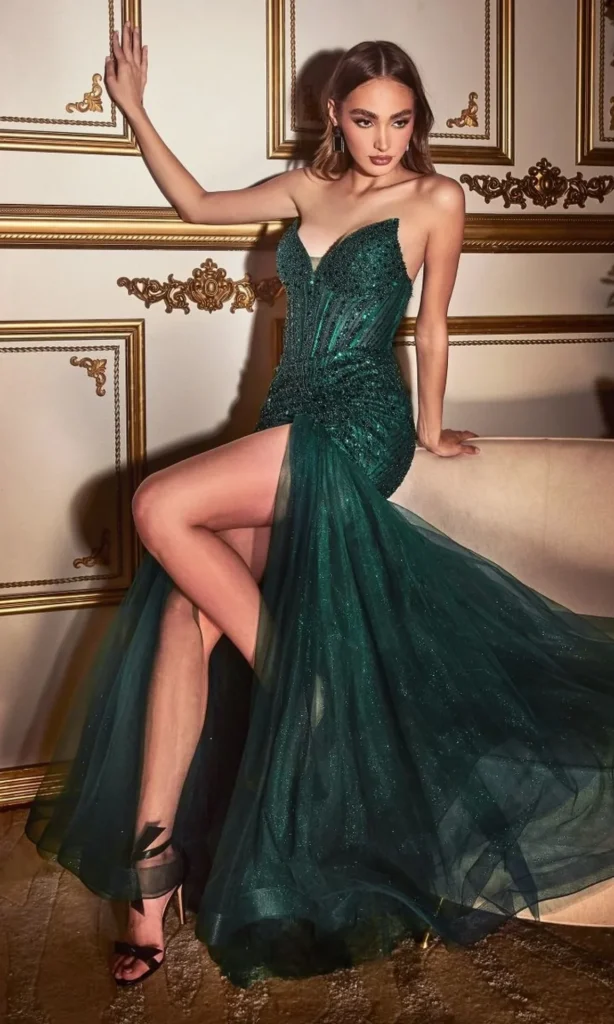
The success of a mermaid silhouette depends heavily on fit precision. Even small construction or sizing issues can disrupt the entire visual balance of the gown.
Understanding how mermaid dresses fit the body helps shoppers identify whether a gown is engineered properly.
Bust Fit
The bust area should feel:
- Secure
- Balanced
- Stable
- Smooth
without excessive compression.
A properly fitted bodice:
- Maintains neckline position
- Prevents gaping
- Supports movement
- Creates natural lift
Rolling edges or collapsing cups often indicate weak structure or incorrect sizing.
Waist Contouring
The waist should appear sculpted but not painfully compressed.
Good contouring creates:
- Defined proportions
- Smooth transitions
- Stable tension balance
without creating visible stress lines or bunching.
Hip Definition
Mermaid gowns depend heavily on hip shaping because the silhouette transitions dramatically before flaring outward.
Strong body contouring formalwear should:
- Follow curves smoothly
- Avoid pulling distortion
- Maintain symmetry
- Support natural movement
Uneven hip contouring often signals weak engineering or poor pattern shaping.
Thigh Compression and Mobility
The fitted thigh area should feel controlled but still allow:
- Walking
- Sitting
- Turning
- Dancing
Poor construction may create:
- Excessive restriction
- Twisting fabric
- Movement resistance
- Wrinkling stress
Well engineered gowns balance contouring with mobility.
Flare Placement and Balance
The flare transition defines the dramatic elegance of a mermaid silhouette.
Proper flare placement depends on:
- Height
- Hip proportions
- Leg length
- Overall silhouette balance
A poorly positioned flare may visually shorten the body or disrupt proportion harmony.
Mermaid Gown Fitting Checklist
When evaluating structured mermaid gown fit, look for:
- Stable neckline placement
- Smooth waist contouring
- Even side seams
- Comfortable breathing
- Controlled but flexible movement
- Balanced hip shaping
- Natural flare transition
BareMuse develops mermaid silhouettes through movement focused fitting because the gown should maintain elegance during real wear rather than only in static posing.
Common Construction Problems in Poorly Made Mermaid Dresses
Two mermaid gowns may appear similar online but perform completely differently in real life because internal construction quality varies dramatically.
Weak engineering often becomes obvious during movement.
Rolling Necklines
Rolling occurs when the neckline bends outward or collapses during wear.
This usually happens because of:
- Weak boning
- Poor support placement
- Thin lining
- Insufficient structure
A rolling neckline disrupts the entire upper silhouette visually.
Collapsed Bodices
Collapsed bodices lose shape throughout wear because the structure cannot maintain vertical support.
Signs include:
- Bust flattening
- Wrinkling
- Uneven contouring
- Shifting tension
Good boning in mermaid dresses prevents this instability.
Uneven Boning Placement
Poor boning alignment may create:
- Asymmetrical shaping
- Side seam distortion
- Visible tension imbalance
- Awkward contouring
Strategic placement matters just as much as material quality.
Fabric Wrinkling
Wrinkling often signals tension problems inside the garment.
This may result from:
- Weak support systems
- Poor fit balance
- Incorrect fabric integration
- Inadequate reinforcement
Luxury gowns minimize wrinkling through advanced engineering rather than surface aesthetics alone.
Restricted Movement
Some poorly designed mermaid gowns become so restrictive that walking feels unnatural.
Strong strapless gown engineering should allow controlled mobility while maintaining contouring.
A beautiful silhouette should not sacrifice basic movement comfort entirely.
BareMuse prioritizes wearable structure because true elegance depends on how the gown performs throughout actual wear rather than simply how it photographs while standing still.
How Fabric Changes the Structure of Mermaid Gowns
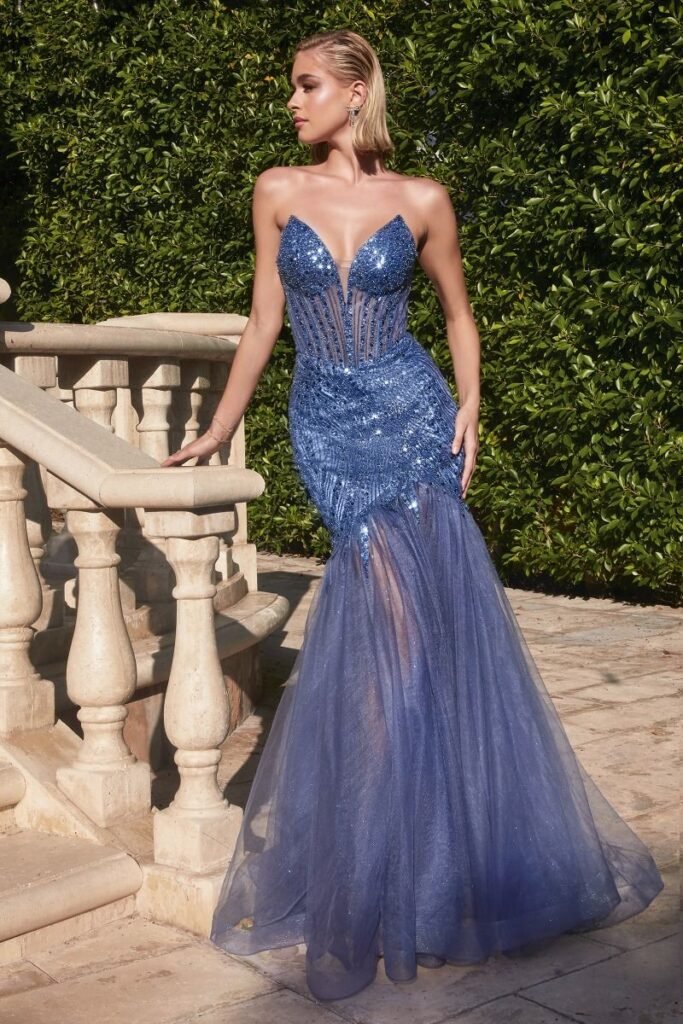
Fabric dramatically affects how a mermaid gown behaves structurally. The same silhouette can feel entirely different depending on material weight, stretch, and tension response.
Satin Mermaid Dresses
Satin creates:
- Glossy definition
- Sharp contour visibility
- Dramatic silhouette emphasis
Because satin reflects light strongly, construction flaws become easier to notice.
This makes strong internal structure especially important.
Stretch Knit Mermaid Dresses
Stretch knits offer:
- Greater mobility
- Flexible contouring
- Body adaptation
However too much stretch may weaken silhouette precision without proper support reinforcement.
Tulle and Layered Structures
Layered tulle gowns often create:
- Soft volume
- Romantic movement
- Dimensional flare
These designs may require stronger bodice engineering to balance the visual weight of the skirt.
Crepe and Sculpted Minimalism
Crepe creates:
- Clean contour lines
- Elegant minimalism
- Smooth structure
Minimalist fabrics expose construction quality quickly because there are fewer embellishments to disguise tension issues.
Heavy vs Lightweight Fabric Behavior
Heavy fabrics create:
- Stronger drape
- More downward pressure
- Greater structural demands
Lightweight fabrics create:
- More movement
- Softer contouring
- Increased flexibility
Both categories require different support strategies.
BareMuse carefully studies fabric behavior because exceptional mermaid gown construction depends on the interaction between textiles, structure, and body movement.
Why BareMuse Focuses on Engineering in Strapless Mermaid Gowns
BareMuse approaches mermaid gowns through structural design rather than surface aesthetics alone.
Movement-Tested Construction
Each gown is evaluated during:
- Walking
- Sitting
- Turning
- Dancing
to ensure balanced movement and support stability.
Balanced Compression Systems
BareMuse prioritizes:
- Controlled contouring
- Breathable support
- Comfortable tension balance
instead of painful over compression.
Elegant Support Without Excess Tightness
Strong support should feel:
- Secure
- Stable
- Comfortable
- Wearable
through long events.
Designing for Long Wear Comfort
BareMuse develops support systems that maintain:
- Posture
- Shape retention
- Neckline stability
- Mobility
through extended wear.
Creating Sculpted but Wearable Silhouettes
The goal is to combine:
- Architectural contouring
- Feminine elegance
- Real movement comfort
- Long wear practicality
through refined internal engineering.
Conclusion
Understanding Strapless Mermaid Gowns means understanding the hidden engineering that shapes their dramatic silhouette. From boning in mermaid dresses to advanced internal corsetry in mermaid gowns, structure determines:
- Neckline stability
- Waist contouring
- Hip shaping
- Movement comfort
- Long wear support
far more than many shoppers initially realize.
A beautiful mermaid gown should not rely on painful tightness or restrictive construction alone. Instead, thoughtful strapless mermaid dress support creates balanced compression, elegant posture, and wearable sculpting that enhances the body naturally.
Whether evaluating fabric behavior, internal support systems, or overall mermaid gown structure, shoppers benefit greatly from understanding how construction quality changes both appearance and comfort.
BareMuse believes exceptional formalwear begins beneath the surface. Through advanced structural engineering, movement conscious design, and refined contour shaping, BareMuse creates mermaid gowns that feel sculpted, supportive, and elegantly wearable from every angle.